
Views: 0 Author: Site Editor Publish Time: 2026-11-11 Origin: Site
Touch screens pick up fingerprints the moment you unlock your phone, swipe a tablet, or tap a car's infotainment panel. Oils from your skin build up fast, dulling the display and forcing you to wipe it down every few minutes. That constant cleaning isn't just annoying — it can also wear down the screen's surface over time.
This is where an anti-fingerprint film for screen comes in. It's a thin, specially engineered coating that sits on top of your display and resists the oils and grease your fingers leave behind. Instead of smearing every time you touch the glass, the surface stays clearer for longer, and swipes feel noticeably smoother.
Below, we'll break down how this technology works, where it's used, and what separates a high-performance film from a cheap imitation. We'll also look at how manufacturers like MR.FILM apply decades of coating expertise to produce films that hold up under daily use.

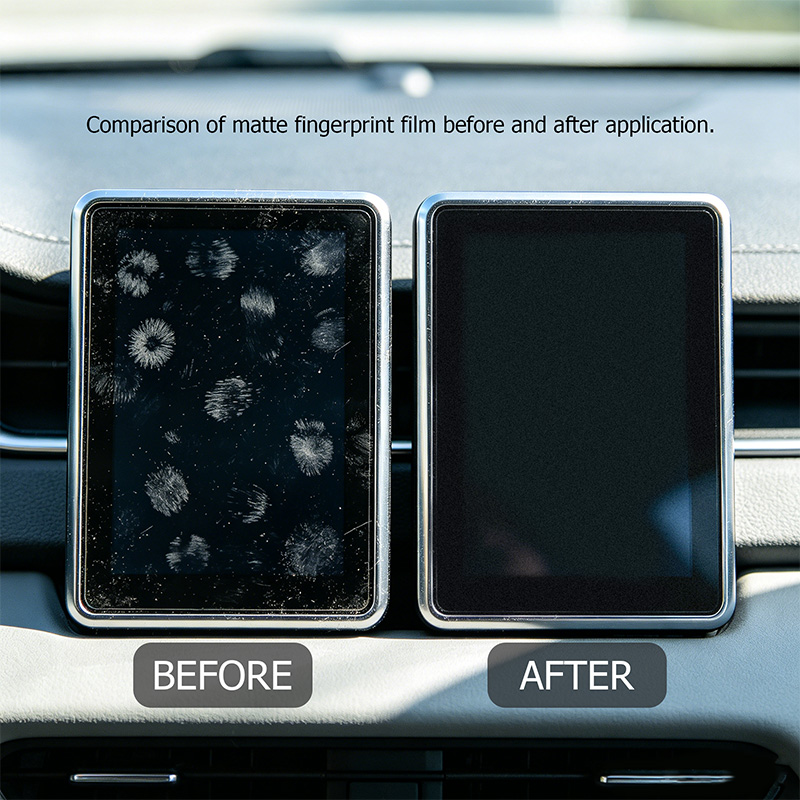
Human skin naturally produces oils, and every tap transfers a small amount onto whatever you're touching. Glass and standard screen protectors have a relatively high surface energy, which means those oils spread out and cling rather than bead up and wipe away cleanly.
Beyond the obvious smudges, unprotected screens face a few compounding problems:
Repeated wiping with cloths or sleeves can introduce fine scratches over months of use.
Buildup reduces touch sensitivity, especially on screens with glossy finishes.
Glare from oily residue makes displays harder to read in bright light, including direct sunlight in a vehicle.
None of these issues are dramatic on their own, but together they shorten the useful life of a screen and make it look worn well before the hardware underneath actually fails.
Most coatings rely on an oleophobic layer, a fluoropolymer treatment that lowers the surface energy of the glass. Lower surface energy means oils can't spread out across the screen. Instead, they form small beads that wipe away with almost no pressure.
A well-formulated anti-fingerprint film for touch screen applications also needs to preserve touch sensitivity and optical clarity. That's a balancing act: add too little coating and fingerprints still smear; add too much and you risk a hazy finish or reduced responsiveness. This is why formulation and lamination quality matter as much as the raw materials.
Here's a quick comparison of common screen protection approaches and how they stack up:
Protection Type | Fingerprint Resistance | Scratch Resistance | Touch Sensitivity | Typical Lifespan |
|---|---|---|---|---|
Standard tempered glass | Low | High | Good | 2-3 years |
Basic PET film | Low-Medium | Low | Good | 6-12 months |
Oleophobic-coated film | High | Medium-High | Excellent | 1-2 years |
Anti-fingerprint nano-coated glass | High | High | Excellent | 2-3 years |
As the table shows, coating quality — not just material thickness — determines how well a screen resists daily wear.
While phones and tablets get most of the attention, fingerprint-resistant coatings serve a growing number of touch interfaces. ATMs, point-of-sale terminals, and industrial control panels all benefit from a surface that stays usable despite constant handling.
Modern dashboards are packed with touch panels, from infotainment systems to climate controls. These screens face conditions phones rarely encounter: temperature swings, direct sunlight, and vibration from the road. A car displays anti-fingerprint film needs to resist smudging while also holding up to heat and UV exposure without yellowing or peeling.


Because drivers glance at these screens frequently, even brief, smudge-related glare can be a distraction. A quality coating keeps the display legible, which is as much a safety consideration as a cosmetic one.
Not all anti-fingerprint films are built the same way, and the difference often comes down to the manufacturer's R&D depth and production controls. Guangdong Mr.Film Photoelectric Technology Co., Ltd., known in the market as MR.FILM, has spent over 27 years developing window and screen film technologies, backed by more than 40 core R&D engineers across three dedicated research centers.
MR.FILM holds 135 national IP applications, including 47 invention patents, and operates a dust-free production base with automated coating machinery. For brands or distributors sourcing anti-fingerprint film at scale, this combination of in-house formulation and OEM/ODM manufacturing means consistent coating thickness, reliable oleophobic performance, and film that's tested against the kind of daily handling screens actually experience.
That track record matters when you're choosing between a film that looks fine on day one and one that still performs after a year of fingers, sunlight, and cleaning wipes.
Fingerprints are unavoidable, but a worn-out, smudge-covered display doesn't have to be. Whether you're protecting a smartphone, a retail touch kiosk, or a vehicle's dashboard, the right coating keeps surfaces clearer, more responsive, and easier to maintain.
If you're evaluating options for your own products or vehicles, take a closer look at the functional film ranges available and compare coating specifications before committing to a supplier. A film backed by real R&D investment tends to outperform generic alternatives, both in day-to-day feel and long-term durability.
Does anti-fingerprint film reduce touch screen sensitivity?
A well-formulated film shouldn't noticeably affect touch response. Quality coatings are engineered to maintain sensitivity while adding oil resistance, though cheaper films may introduce a slight lag.
How long does an anti-fingerprint coating typically last?
Most oleophobic coatings last between one and two years with regular use, though nano-coated glass options can hold up for two to three years before reapplication is needed.
Can anti-fingerprint film be used on curved car displays?
Yes. Flexible films designed for automotive applications can be applied to curved infotainment and cluster screens, provided the film is rated for heat and UV exposure typical in vehicle interiors.
Is anti-fingerprint film the same as a standard screen protector?
Not exactly. Standard protectors primarily guard against scratches and impacts, while anti-fingerprint films focus on reducing oil buildup and smudging through a specialized oleophobic coating, though many products now combine both functions.


