
Views: 0 Author: Site Editor Publish Time: 2026-08-20 Origin: Site
Anti-fingerprint film for screen protects displays from smudges, oils, and daily wear by applying a thin, oleophobic coating that repels fingerprints and makes surfaces easier to clean. Suitable for smartphones, tablets, kiosks, and automotive displays, these films extend screen lifespan while maintaining optical clarity.
Touchscreens are everywhere. From the smartphone in your pocket to the infotainment panel in your car, most of the surfaces we interact with daily are glass, and glass, as anyone who's handed a phone to a toddler knows, does not stay clean for long.
Fingerprint smudges are more than a cosmetic annoyance. Over time, oils from repeated skin contact can degrade oleophobic coatings on unprotected screens, reducing touch sensitivity and visual clarity. For commercial displays, kiosks, or vehicles, where dozens of hands make contact each day, the problem compounds fast.
The solution is straightforward: a dedicated protective film that keeps your screen clear, responsive, and looking new. At MR.FILM, we've spent over 27 years engineering functional films that solve exactly this kind of real-world problem, and our anti-fingerprint technology is one of our most trusted product lines.
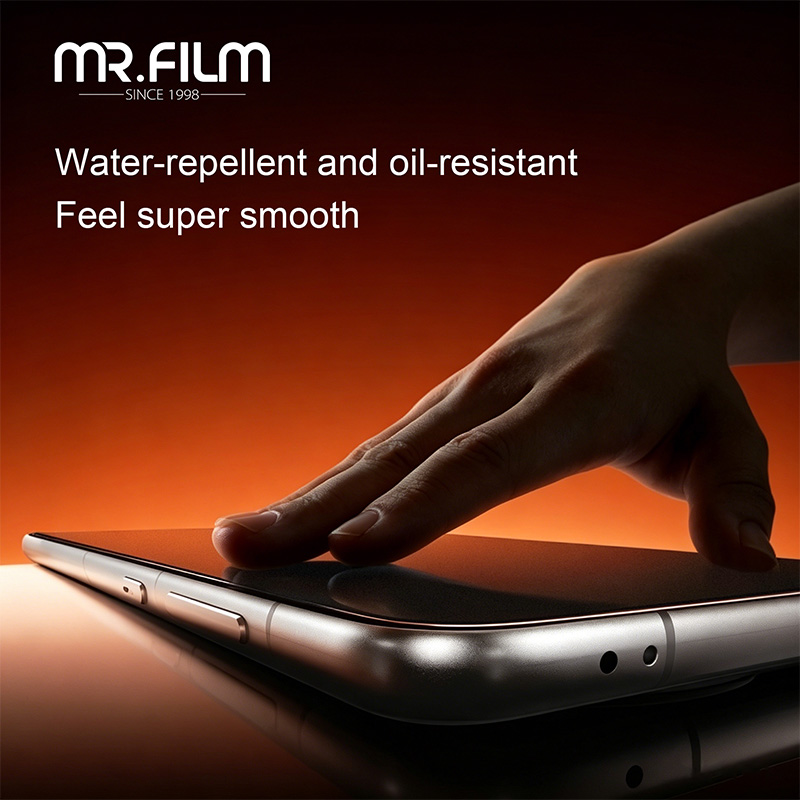
Standard glass surfaces have microscopic pores that trap oils from fingertips. Anti-fingerprint films work by layering an ultra-thin oleophobic (oil-repelling) and hydrophobic (water-repelling) coating over the screen. When a finger makes contact, oils spread minimally and can be wiped away with almost no effort, often with a dry cloth alone.
The result is a surface that stays visually cleaner between wipes, reduces glare from ambient light, and preserves the display's original color accuracy and brightness. High quality films also add a hard coating layer that resists scratches without adding visible thickness.
Choosing the right anti-fingerprint film for screen matters more than most buyers expect. Cheap alternatives may yellow over time, reduce touch responsiveness, or lift at the edges under temperature changes, issues that are especially problematic for commercial and industrial applications.
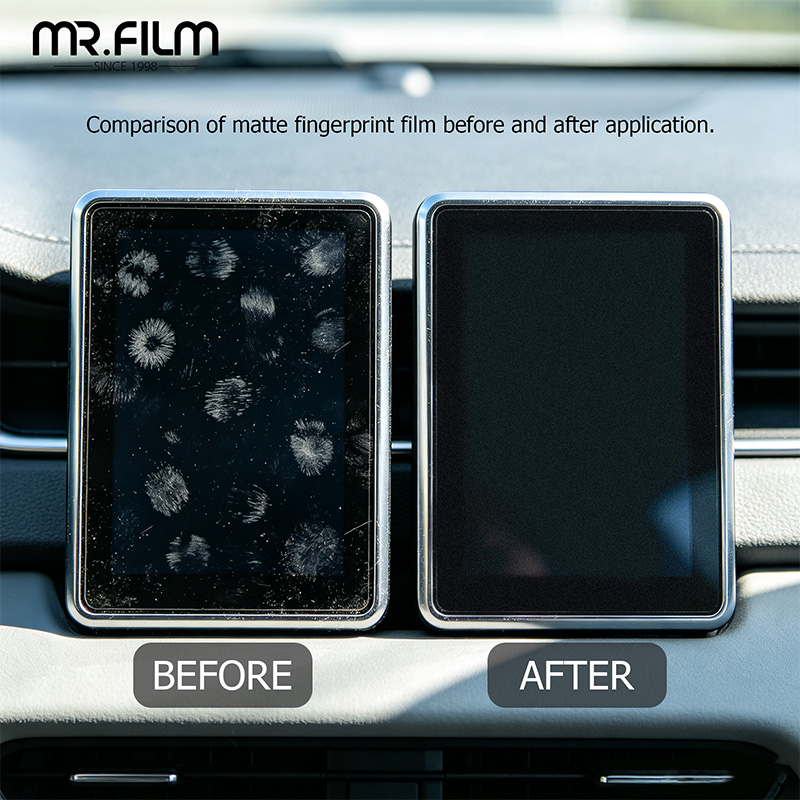
Consumer devices like smartphones and tablets are wiped down occasionally, but public-facing touch screens face a harder test. Retail kiosks, self-service terminals, hospital check-in panels, and museum interactive displays are touched by hundreds of users daily. Keeping them clean is a maintenance challenge; keeping them visually presentable is a brand challenge.
This is where anti-fingerprint film for touch screen applications become a practical business decision, not just a protective measure. A well-applied film reduces cleaning frequency, maintains consistent optical performance, and protects the underlying screen from surface abrasion. For high-traffic installations, that translates directly to lower operating costs and fewer screen replacements over time.
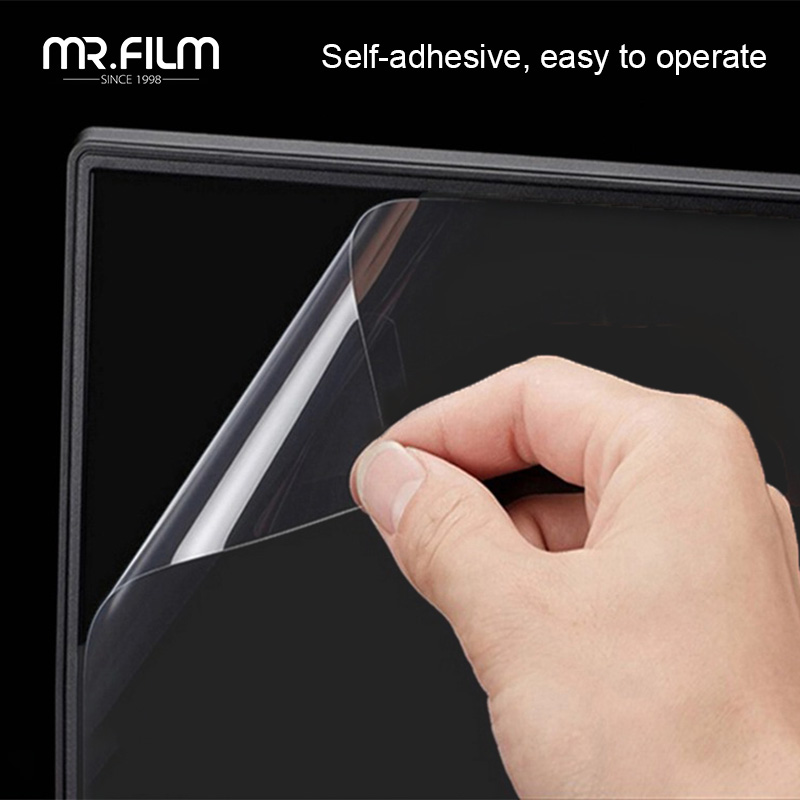
MR.FILM's anti-fingerprint functional films are engineered with multi-layer construction, combining scratch resistance, oleophobic performance, and optical clarity in a single application. The films are compatible with capacitive touch technology, meaning touch sensitivity remains unaffected after installation.

The practical difference between a protected and unprotected screen becomes clear quickly in high-use environments. The table below summarizes the key performance differences:
Feature | Unprotected Screen | With Anti-Fingerprint Film |
|---|---|---|
Smudge resistance | Low | High |
Scratch resistance | Depends on glass grade | Enhanced with hard coating |
Cleaning frequency | Multiple times daily | Significantly reduced |
Oleophobic coating lifespan | Degrades with use | Extended by protective layer |
Touch sensitivity | Standard | Maintained |
Visual clarity over time | Decreases | Preserved |
Replacement cost (long-term) | Higher | Lower |
For commercial buyers managing fleets of devices or large-format displays, this comparison has a direct budget implication. The upfront investment in film protection consistently outperforms the cumulative cost of screen repairs and deep cleaning cycles.
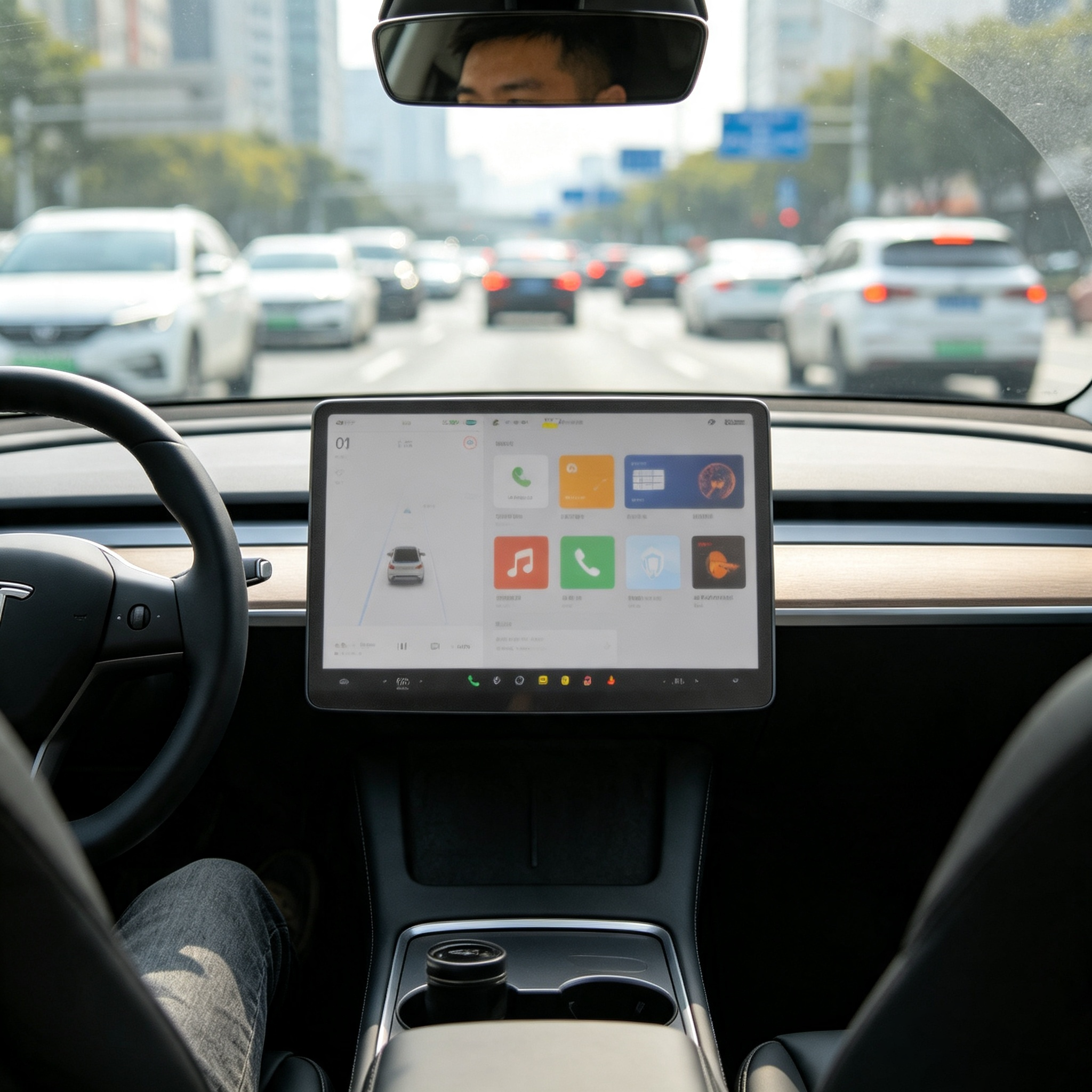
Screens inside vehicles face conditions that no office touchscreen ever encounters. Temperature swings between freezing winters and summer heat extremes, UV exposure through glass, and the vibration of a moving vehicle all place additional stress on display coatings. Standard consumer screen protectors are not engineered for this environment.
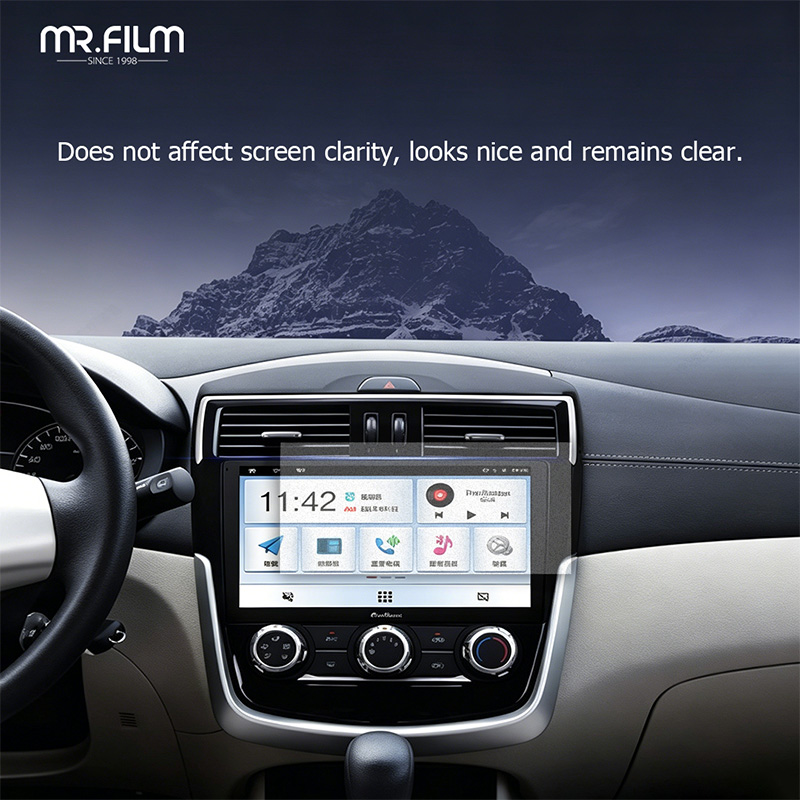
Car displays anti-fingerprint film is a specialized product category designed to meet these demands. Automotive-grade films need to maintain adhesion and optical clarity across a wide temperature range, resist UV yellowing, and remain stable under constant vibration. They also need to work cleanly with the curved surfaces common in modern vehicle infotainment panels.
MR.FILM's auto protection film series addresses these requirements with materials developed specifically for in-vehicle environments. Whether the application is a center console display, a rear-seat entertainment screen, or a digital instrument cluster, the film maintains performance without interfering with touch functionality or visual output.
MR.FILM (Guangdong Mr.Film Photoelectric Technology Co., Ltd.) has been manufacturing functional and protective films since 1998, over 27 years of accumulated expertise in film chemistry, coating technology, and application engineering. The company holds 135 national intellectual property applications, including 47 invention patents, across its product lines.
Three factors differentiate MR.FILM's anti-fingerprint film products from competitors:
R&D depth: Backed by 40+ core R&D experts and 3 dedicated research centers, MR.FILM develops proprietary coating formulas rather than relying on off-the-shelf materials.
Manufacturing control: A dust-free production base and in-house automated coating machines ensure consistent quality across every roll of film produced.
Customization capability: Full OEM and ODM services allow buyers to specify thickness, dimensions, surface texture, and packaging, critical for industrial and automotive integrations that require precise specifications.
MR.FILM serves 20+ leading brands in the glass, screen protection, and mirror industries, supplying films that meet both commercial performance standards and international certification requirements.
Anti-fingerprint screen films are typically made from a base layer of PET (polyethylene terephthalate) or tempered glass, combined with an oleophobic top coating that repels oils and water. Higher end films add a scratch resistant hard coating and an anti-reflective layer. MR.FILM's functional films use multi-layer constructions engineered for durability and optical clarity.
No! when correctly manufactured and applied, anti-fingerprint film does not reduce touch sensitivity on capacitive screens. The key is film thickness and material compatibility. Overly thick or poorly formulated films can interfere with touch response, which is why sourcing from an experienced manufacturer matters.
Lifespan depends on usage intensity and the quality of the film. For consumer devices with moderate use, a high-quality film can last 12 months before the oleophobic coating shows visible degradation. For high-traffic commercial or automotive applications, periodic replacement every 6–12 months is common practice.
Yes, but only films specifically designed for curved surfaces. Standard flat-cut films will lift or bubble on curved panels. MR.FILM's automotive-grade films are available in flexible constructions compatible with the curved form factors used in modern vehicle infotainment systems.
Yes. MR.FILM offers full OEM and ODM services, including custom dimensions, surface finishes, adhesive types, and packaging. Industrial buyers with specific performance requirements can work directly with MR.FILM's R&D team to develop application-specific solutions.
Generic screen protectors are typically consumer-grade products focused on scratch prevention. MR.FILM's anti-fingerprint functional films are manufactured to industrial standards, with tested performance across temperature ranges, UV exposure, and long-term adhesion stability, requirements that consumer products are not designed to meet.
Fingerprints are inevitable. Screen degradation doesn't have to be. Whether the application is a retail kiosk, a medical terminal, a vehicle infotainment panel, or a consumer device, the right protective film makes a measurable difference in how long a display performs and how much it costs to maintain.
MR.FILM brings over two decades of manufacturing expertise and proprietary coating technology to every product in its functional film range. For buyers looking for reliable, customizable, and performance-tested anti-fingerprint solutions, MR.FILM is a manufacturing partner worth talking to. Contact the MR.FILM team at ella@mr-film.cn or visit gdmrfilm.com to request samples or discuss your project specifications.


