
Views: 0 Author: Site Editor Publish Time: 2026-09-08 Origin: Site
Every driver knows the frustration of glancing at a dashboard screen only to find it smeared with fingerprints, dust, and oil. As vehicles pack in larger touchscreens for navigation, climate control, and infotainment, keeping those displays clean and legible has become a real design challenge. Manufacturers and aftermarket suppliers are turning to specialized coatings to solve this problem, and the results are changing how drivers interact with their cars.
This growing demand for cleaner, longer-lasting displays has pushed film manufacturers to refine their coating chemistry and application methods. Modern vehicles increasingly rely on multi-touch panels for nearly everything, from adjusting mirrors to controlling entertainment systems, which means the surface quality of these screens directly affects the driving experience. A high-performance car displays anti-fingerprint film reduces smudging, resists oil transfer from fingertips, and keeps touch response accurate even after repeated use.
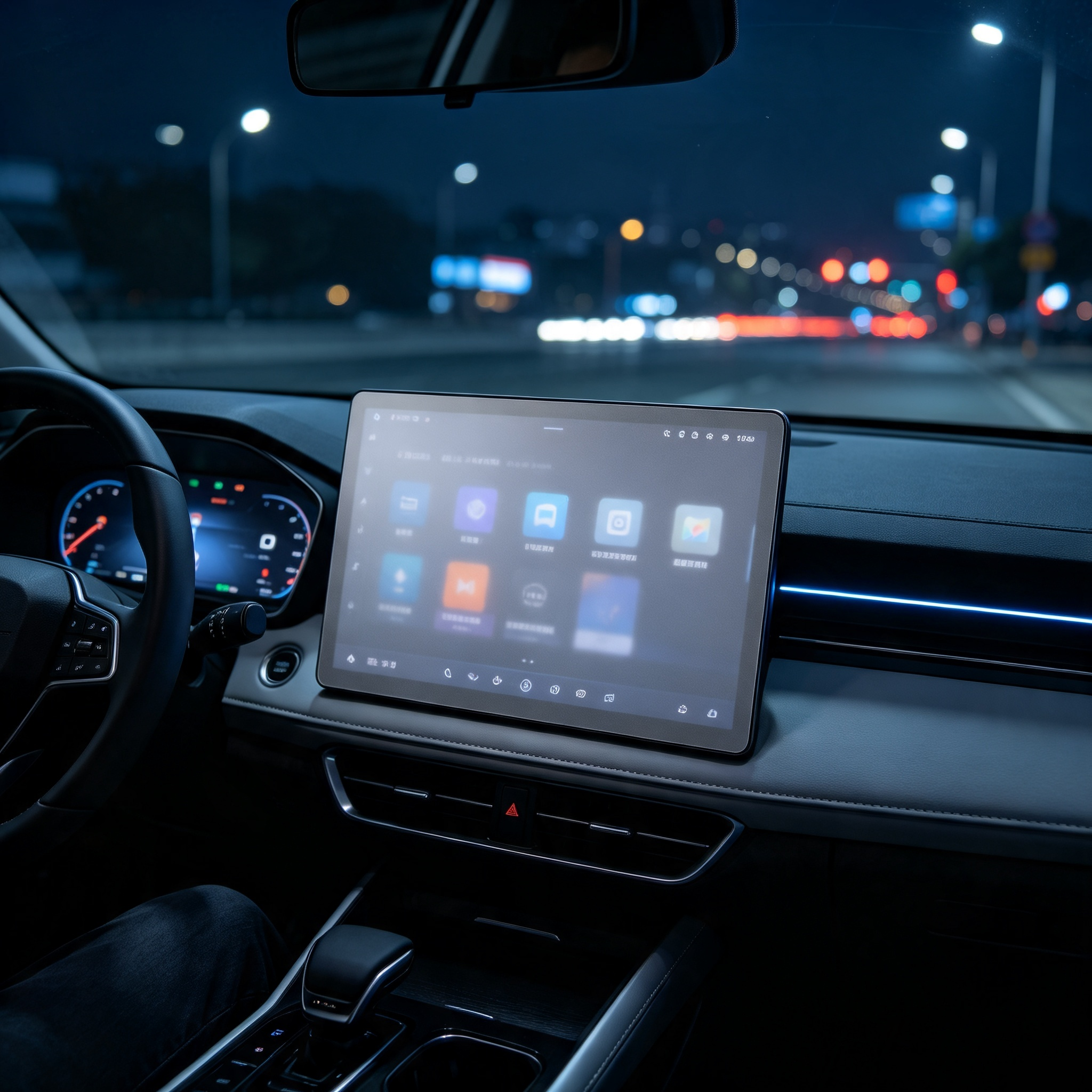

Automotive displays sit at an angle that's constantly within arm's reach, and drivers touch them dozens of times per trip. Skin naturally produces oils, and every tap leaves a small residue behind. Over weeks and months, this buildup dulls the screen, creates glare under sunlight, and makes text harder to read.
Standard glass or plastic covers don't do much to resist this residue. Without a protective coating, oils sit directly on the surface and smear the moment someone wipes the screen with a sleeve or cloth. This is where specialized coatings step in, creating a smoother, less porous surface that oils simply can't cling to as easily.
The performance of these coatings comes down to surface chemistry. Most rely on an oleophobic (oil-repelling) layer bonded to the film's top surface, often combined with a hydrophobic property that repels water as well. Together, these properties create a surface with a high contact angle, meaning liquids and oils bead up and slide off rather than spreading and sticking.
A well-engineered coating should deliver several measurable benefits:
Reduced smudge visibility – oils bead up instead of spreading across the screen
Easier cleaning – a simple wipe removes most residue without streaking
Maintained touch sensitivity – the coating doesn't interfere with capacitive touch response
Scratch resistance – daily taps and swipes won't degrade the surface over time
Optical clarity – the film shouldn't distort colors or reduce brightness
Guangdong Mr.Film Photoelectric Technology Co., Ltd has spent more than 27 years refining these exact properties, backed by three dedicated R&D centers and over 100 authorized intellectual property rights. That depth of research matters, because getting the coating chemistry wrong can mean a film that looks great on day one but degrades within a few months of regular contact.
Not all protective films perform the same way. The table below breaks down common differences between basic screen protectors and dedicated anti-fingerprint coatings used in vehicle displays.
Feature | Standard Screen Protector | Anti-Fingerprint Coating Film |
|---|---|---|
Oil resistance | Low | High |
Water contact angle | ~60° | 100°+ |
Touch sensitivity impact | Minimal to moderate | Minimal |
Cleaning ease | Requires frequent wiping | Wipes clean with minimal effort |
Optical clarity | Standard | High, often anti-glare |
Durability against daily taps | Moderate | High |
This comparison shows why automotive brands and aftermarket installers increasingly specify coated films rather than basic protective layers. The added oleophobic treatment directly addresses the biggest complaint drivers have with touchscreens: constant smudging.
While center console displays get the most attention, the same coating technology applies to instrument clusters, rear-seat entertainment panels, and even climate control touch panels. Any surface that receives repeated finger contact benefits from the same oil- and smudge-resistant properties.
An anti-fingerprint film for touch screen applications isn't limited to vehicles either. The same underlying chemistry shows up in consumer electronics, kiosk displays, and industrial control panels, anywhere a touch interface needs to stay clear and responsive despite constant handling. For automotive applications specifically, the film also has to withstand temperature swings, from a scorching dashboard in summer to freezing mornings in winter, without peeling, yellowing, or losing its protective properties.


Not every coating on the market holds up to real-world automotive conditions. Buyers should look for a few specific traits when comparing options:
Proven durability testing – ask for data on abrasion resistance and UV stability
Consistent optical performance – the film shouldn't introduce haze or color shift
Manufacturing quality control – dust-free production environments reduce the risk of surface defects
OEM and ODM support – suppliers who offer customization can match specific screen dimensions and curvature
Mr.Film operates a dust-free production base equipped with automated coating machines, which helps maintain consistency across large production runs. This matters for automakers and aftermarket suppliers who need reliable performance across thousands of units rather than a handful of samples.
For screens with curved or irregular shapes, precision matters even more. A properly fitted Anti-fingerprint Film for Screen needs to conform to the display without bubbling or lifting at the edges, which is why die-cutting accuracy and adhesive formulation are just as important as the coating itself.

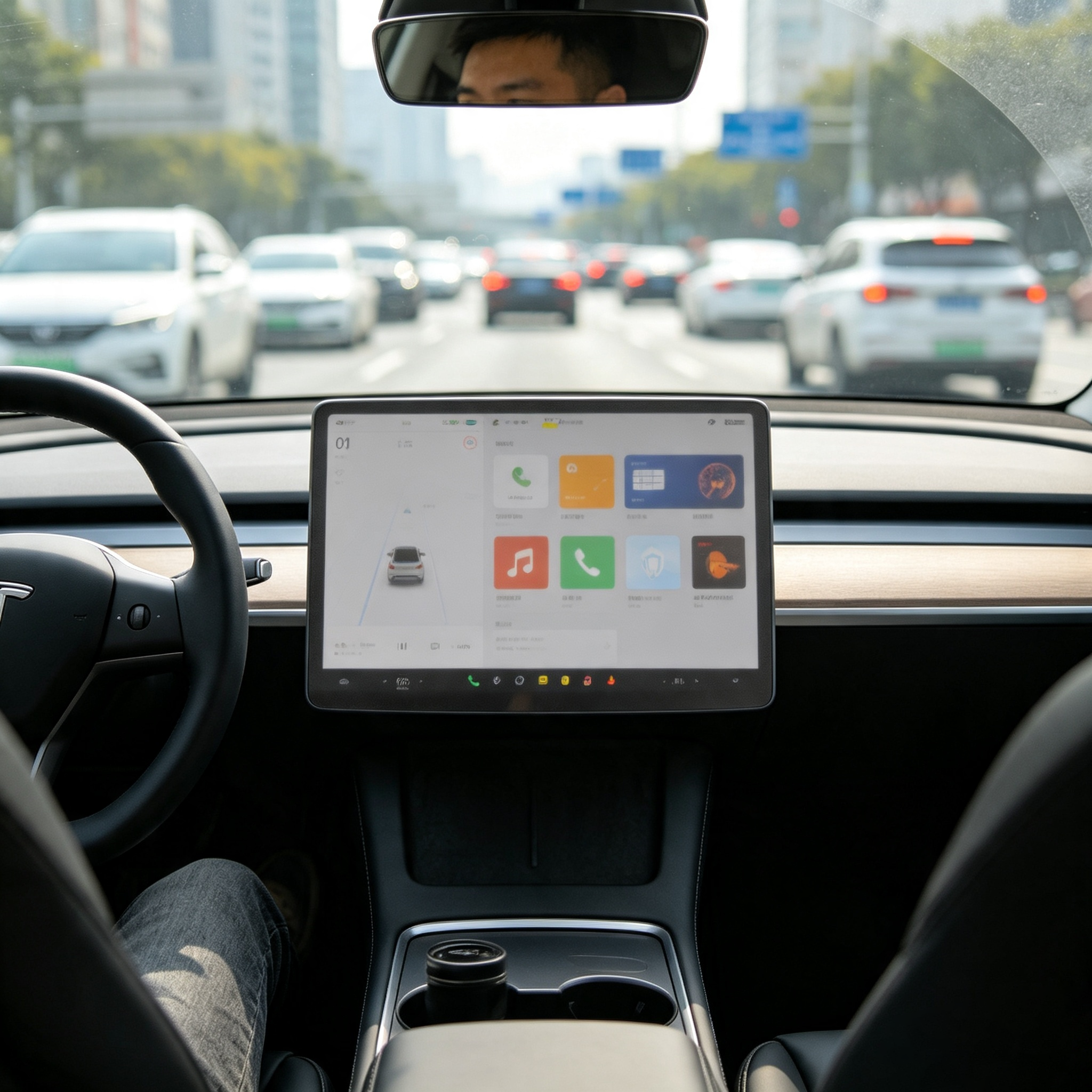
Fingerprint smudges seem like a minor annoyance until you're squinting at a navigation screen in bright sunlight or struggling to read a climate setting through a haze of oil residue. Investing in a quality coated film solves this problem at the surface level, rather than relying on drivers to constantly wipe their screens clean.
For manufacturers, offering this feature as a standard or optional upgrade also signals attention to detail and long-term product quality. Drivers notice when a screen still looks and performs like new after months of daily use, and that impression carries over to how they view the rest of the vehicle's build quality.
Does anti-fingerprint film reduce touchscreen sensitivity?
A well-formulated coating has minimal impact on capacitive touch response. Quality films are engineered to maintain accurate touch detection while still providing oil and smudge resistance.
How long does the coating typically last?
Durability varies by product, but coatings from established manufacturers with proper R&D backing typically maintain their oleophobic properties for up to one year of regular use, depending on exposure to sunlight and cleaning frequency.
Can this film be applied to curved automotive displays?
Yes, provided the film is die-cut and formulated for the specific screen shape. Precision manufacturing is essential to avoid bubbling or edge lifting on curved surfaces.
Is this technology only for cars?
No. The same coating principles apply to consumer electronics, kiosks, and industrial touch panels, though automotive use adds requirements around temperature resistance and UV stability.


