
Views: 0 Author: Site Editor Publish Time: 2026-09-09 Origin: Site
Homeowners and designers are increasingly drawn to the look of natural wood, but solid timber comes with a price tag, a maintenance schedule, and a vulnerability to moisture that many interiors simply can't accommodate. This is why decorative surface films have become a go-to alternative for kitchens, offices, retail spaces, and furniture manufacturing. They deliver the visual richness of timber grain while solving the practical headaches that come with the real thing.
This shift isn't just a passing trend. As renovation costs climb and sustainability concerns push designers toward materials that require fewer natural resources, film-based finishes are stepping into a bigger role. Understanding how these products work, what separates a good one from a mediocre one, and where they fit best can help you make a smarter choice for your next project.
Real wood paneling looks stunning on day one, but it doesn't always age gracefully. Humidity causes warping, sunlight fades the finish, and scratches are difficult to repair without refinishing an entire surface. For commercial spaces especially, that kind of ongoing maintenance adds up quickly in both cost and downtime.
Decorative films solve this by applying a durable, wood-textured layer directly onto substrates like MDF, metal, glass, or existing cabinetry. The result mimics the grain, color variation, and even the tactile feel of timber, without the structural weaknesses. A well-manufactured China nature wood pvc film can replicate everything from pale oak to deep walnut tones, giving designers flexibility that solid wood simply can't match at scale.
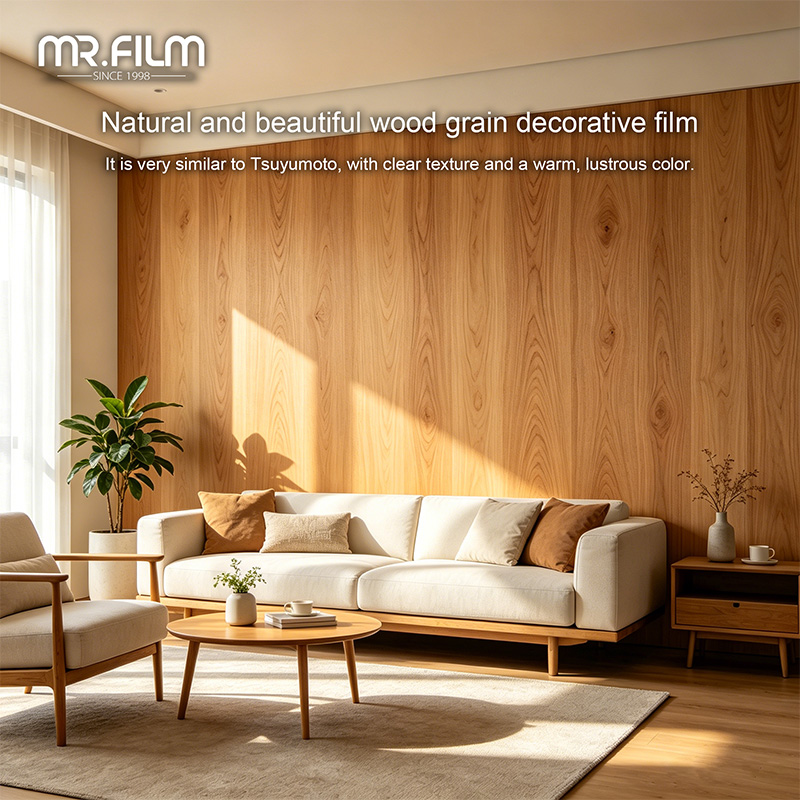

Restaurants, retail stores, and office lobbies see constant foot traffic and frequent surface contact. Wood veneers in these environments are prone to chipping, staining, and discoloration within a few years. Facilities managers end up choosing between expensive refinishing cycles or accepting a worn, dated appearance. Film-based alternatives sidestep this problem because their protective top layer resists abrasion and everyday wear far better than raw or lightly sealed wood.
The manufacturing process behind today's wood-effect films has come a long way from the flat, glossy plastic wraps of decades past. High-resolution printing technology now captures the subtle color gradients and grain irregularities found in real timber, while embossing techniques add a textured surface that feels closer to natural wood under the hand.
A properly engineered wood grain vinyl wrap also incorporates UV-resistant coatings and adhesive backings suited to the substrate it's applied to, whether that's furniture panels, wall cladding, or door surfaces. This combination of visual accuracy and functional performance is what separates premium decorative films from cheaper imitations that peel or discolor within a year or two.

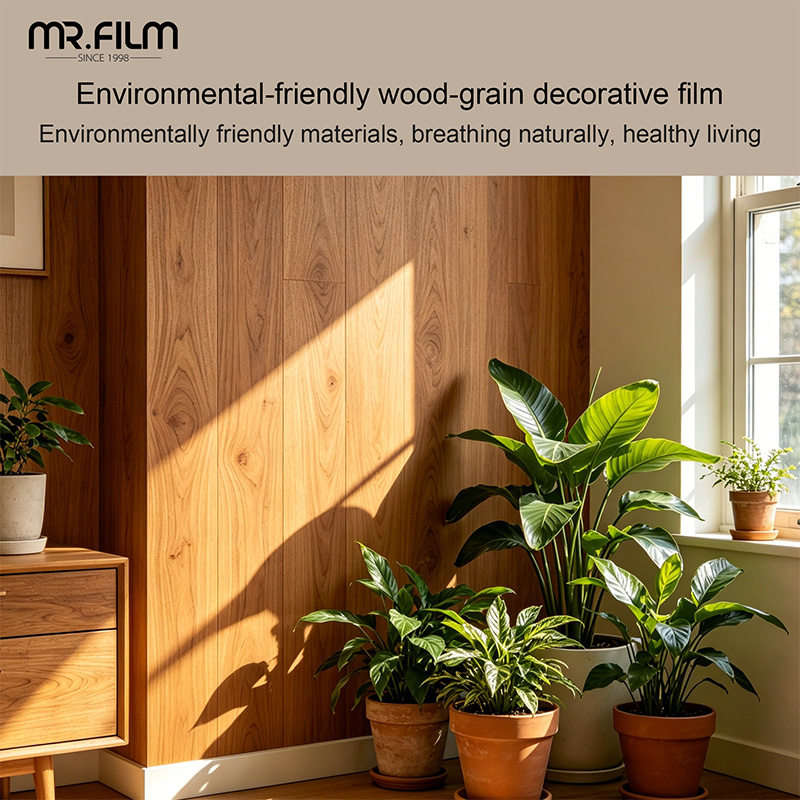
Most decorative films used in furniture and interior applications are PVC-based, chosen for their flexibility, printability, and resistance to moisture. The base layer carries the printed wood-grain pattern, while a top protective film guards against scratching and UV fading. Adhesive layers are formulated to bond securely to a range of surfaces without bubbling or lifting over time, which is one of the more common failure points in lower-quality products.
Here's how decorative film compares to two common alternatives:
Feature | Solid Wood Veneer | Standard PVC Laminate | Decorative Wood-Grain Film |
|---|---|---|---|
Upfront cost | High | Low to moderate | Low to moderate |
Moisture resistance | Poor to fair | Good | Good to excellent |
Maintenance required | Frequent | Minimal | Minimal |
Design flexibility | Limited by natural grain | Moderate | Wide range of finishes and textures |
Installation time | Long | Moderate | Fast |
Typical lifespan | Varies widely | 5–10 years | 8–15 years, depending on grade |
This comparison highlights why film-based finishes have become the practical middle ground: they offer the design flexibility of laminate with a more convincing, tactile wood appearance.
Not every project calls for the same grade of film. A residential cabinet refresh has different demands than a hotel lobby that sees thousands of hands touching its surfaces every week. When evaluating options, pay attention to the thickness of the protective top coat, the adhesive quality, and whether the manufacturer provides UV and abrasion resistance data rather than vague marketing claims.
It's also worth asking about the production environment. Films manufactured in dust-controlled facilities with automated coating lines tend to have fewer surface defects and more consistent color batches, which matters if you're outfitting a large space and need multiple rolls to match seamlessly.
Guangdong Mr.Film Photoelectric Technology Co., Ltd. has spent more than 27 years refining the science behind decorative and functional films, backed by over 40 core R&D engineers and three dedicated research centers. That depth of experience shows up in the details: precise color matching, consistent embossing patterns, and adhesive formulas tested for long-term performance across furniture, building glass, and automotive applications.
The company's dust-free production base and automated coating machinery help ensure that every roll of Wood Grain Film meets consistent quality standards, whether it's destined for a boutique furniture line or a large-scale commercial fit-out. With over 100 authorized intellectual property rights and a track record supplying leading brands across the glass, shower door, and mirror industries, Mr.Film has built a reputation for combining aesthetic accuracy with genuine durability.

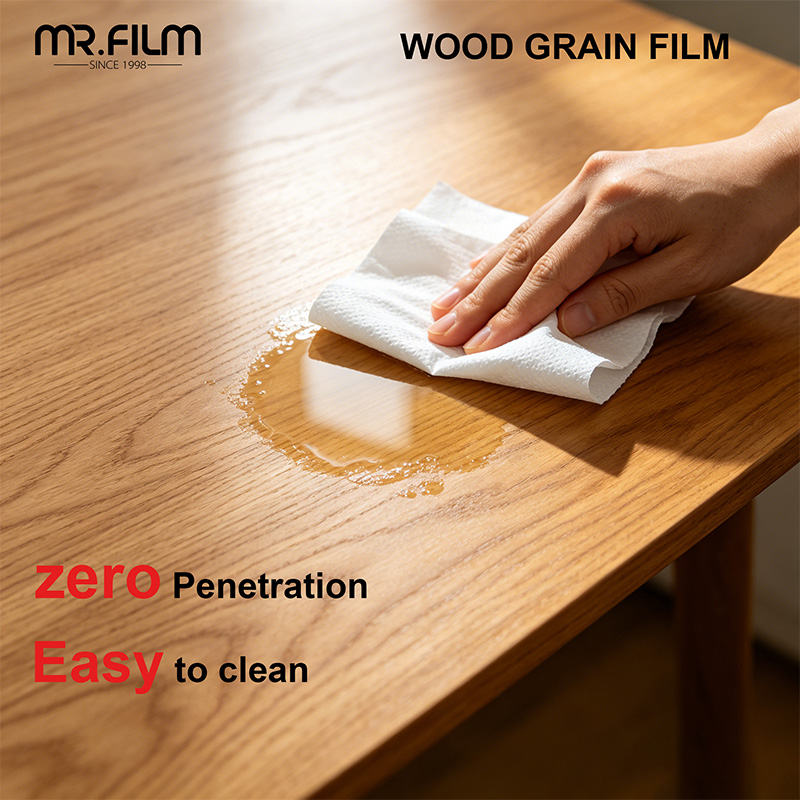
Choosing between real timber and a decorative film finish ultimately comes down to how a space will be used and how much long-term maintenance you're willing to take on. For high-traffic commercial environments, furniture manufacturing, or budget-conscious renovations, decorative wood-grain films offer a compelling balance of appearance, performance, and cost.
If you're planning a renovation or product line that calls for the look of natural wood without its drawbacks, take the time to compare samples, ask manufacturers about their production standards, and request performance data before committing to a supplier.


