
Views: 0 Author: Site Editor Publish Time: 2026-07-01 Origin: Site
TL;DR:
Wood grain PVC decorative film is a cost-effective, durable alternative to real wood veneers. It replicates natural wood textures on surfaces like furniture, cabinets, and wall panels using PVC as the base material. Sourcing from a qualified manufacturer in China ensures consistent quality, competitive pricing, and broad customization options.
There's a reason wood-textured surfaces dominate interior design trends year after year. The warmth, depth, and natural character of wood create spaces that feel considered and inviting. The challenge? Genuine wood is expensive, prone to moisture damage, and increasingly difficult to source sustainably. That's where wood grain PVC decorative film steps in—delivering the same visual appeal at a fraction of the cost and with far greater durability.
This material has quietly become one of the most practical solutions in the furniture and construction industries. From kitchen cabinets to office partitions, it's applied across a staggering range of surfaces, transforming the look and feel of a space without requiring a major renovation. For interior designers, contractors, and manufacturers looking to balance aesthetics with budget, this film is hard to ignore.
This post breaks down how wood grain PVC film works, where it's used, what to look for in a supplier, and why sourcing from China continues to make sense for buyers around the world.


Modern PVC decorative film production uses advanced printing and embossing technologies to achieve textures and patterns that are remarkably close to genuine timber. The process begins with a high-resolution printing layer that captures the grain, knot variations, and color gradients of specific wood species—oak, walnut, teak, and pine are among the most popular.
After printing, an embossing roller presses a three-dimensional texture into the film's surface. This tactile quality is what separates premium film from cheaper alternatives. When light catches an embossed grain pattern at different angles, the result mimics the depth of real wood far more convincingly than a flat print ever could.
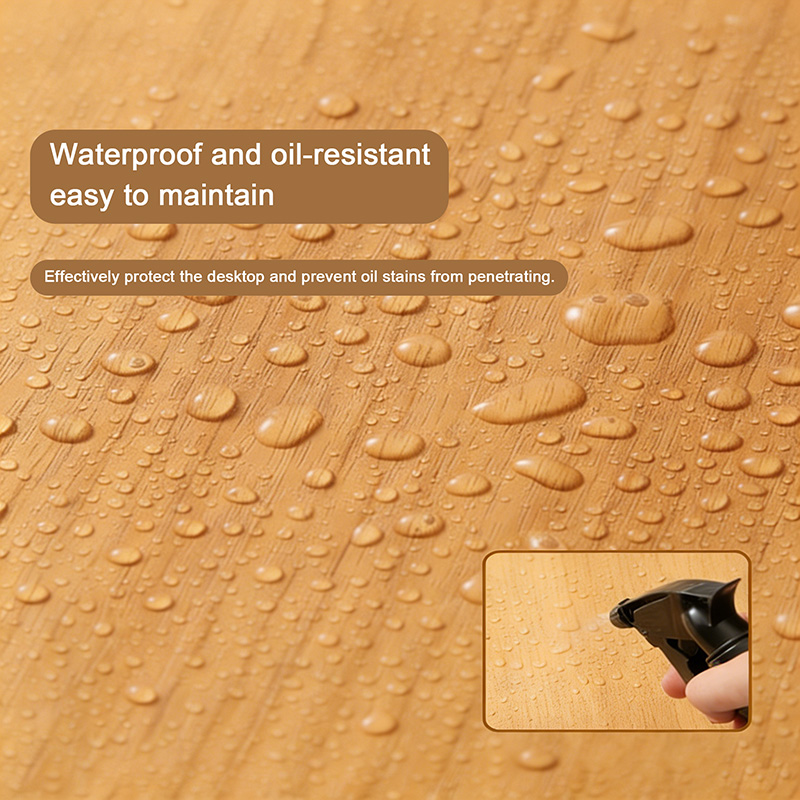
The PVC base itself contributes significantly to the film's performance. It's resistant to moisture, scratches, and UV fading—properties that natural wood veneer simply doesn't offer without ongoing maintenance. This makes wood grain PVC film a particularly strong choice for high-traffic environments or humid spaces like kitchens and bathrooms.
Wood grain PVC film bonds effectively to a wide variety of substrates. The table below outlines the most common applications and surface compatibility:
Surface Type | Common Use Cases | Adhesion Method |
|---|---|---|
MDF / Particleboard | Furniture panels, cabinet doors | Pressure-sensitive adhesive |
PVC profiles | Window frames, door frames | Heat lamination |
Aluminum profiles | Wardrobe frames, partition systems | Thermal transfer or adhesive |
Hollow plastic boards | Wall cladding, ceiling panels | Self-adhesive or lamination |
Glass | Decorative partitions, shower screens | Self-adhesive |
Steel / Metal surfaces | Commercial furniture, lockers | Adhesive lamination |
This versatility is a core reason why manufacturers across furniture, construction, and retail fixture industries rely on PVC decorative film as a finishing material.
The range of applications continues to expand as the material improves. Residential projects account for a significant share of demand—particularly kitchen cabinetry, wardrobe panels, and feature walls. In commercial settings, the film appears on reception desks, retail shelving, hotel room furniture, and office partitions.
One of the less obvious but growing applications is in the automotive and transport sectors. Some manufacturers apply wood grain film to interior trim panels in vehicles, RVs, and marine cabins, where a warm aesthetic is desired without the weight or cost of solid wood.
For businesses sourcing china wood pvc film, the appeal often comes down to the ability to order custom patterns, widths, and thicknesses at scale. A furniture manufacturer producing thousands of cabinet doors needs consistency across every unit—something that's difficult to guarantee with natural veneer but entirely achievable with high-quality PVC film.

Not all PVC decorative film is produced equally. The quality gap between suppliers can be significant, and it shows up in areas that matter—color consistency, adhesive performance, embossing depth, and resistance to delamination over time.
Here are the key criteria to evaluate before placing an order:
Pattern resolution and realism: Request physical samples. High-quality film should have clearly defined grain lines, natural color variation, and a texture that responds differently under direct and diffused light.
Adhesive quality: The adhesive layer determines long-term bond strength. Ask whether the film uses solvent-based or water-based adhesive, and request data on peel strength and temperature tolerance.
Thickness options: Standard film thicknesses range from 0.08mm to 0.5mm depending on the application. Thicker films are more durable and suited to high-contact surfaces.
Compliance and certifications: For export markets, check whether the film meets REACH, RoHS, or other relevant safety standards.
Customization capability: Can the supplier produce custom grain patterns, widths, or colors? This matters for OEM manufacturers with specific product requirements.
Guangdong Mr.Film Photoelectric Technology Co., Ltd is one such supplier that checks all these boxes. With over 27 years of experience in the film industry, Mr.Film brings genuine technical depth to its product development. The company operates dust-free production lines equipped with automated coating machines, ensuring consistency at scale. Its wood grain film range covers dozens of species simulations, and the team supports OEM and ODM orders for clients in over 20 countries.
For buyers exploring china nature wood pvc film options, Mr.Film's combination of in-house R&D, certified production, and export experience makes it a supplier worth evaluating seriously. Reaching the team is straightforward—inquiries can be sent directly to ella@mr-film.cn.
For the vast majority of commercial and residential applications, yes. Real wood veneer carries a price premium that rarely translates into proportional value for end users. It warps in humid conditions, fades under UV exposure, and requires surface refinishing over time. PVC film, by contrast, holds its appearance for years with minimal maintenance.
That said, there are contexts where wood veneer remains the better choice—bespoke luxury furniture, antique restoration, or applications where the material itself is part of the product's story. For everything else, high-quality wood grain PVC film delivers comparable aesthetics with meaningfully better performance.
How durable is wood grain PVC decorative film?
Durability depends on the film's thickness, the quality of the adhesive, and how the surface is maintained. Films with UV-resistant coatings perform better in spaces with direct sunlight.
Can wood grain PVC film be applied to curved surfaces?
Yes. Thinner PVC films (0.08mm–0.15mm) have sufficient flexibility to conform to gently curved surfaces. For tighter curves or three-dimensional profiles, heat application helps the film conform without creasing.
What is the minimum order quantity when sourcing from Chinese manufacturers?
MOQ varies by supplier and product specification. Most manufacturers offer flexible MOQ for standard stocked patterns and higher MOQ requirements for custom designs. It's worth discussing this directly with the supplier during the sampling stage.
How does wood grain PVC film compare to wood grain wallpaper?
Wood grain wallpaper is designed for wall surfaces only and typically lacks the scratch resistance and moisture tolerance of PVC film. PVC decorative film is engineered for furniture and profiles, where surface durability is critical. The two products serve different purposes.
What certifications should I look for in a PVC film supplier?
For European markets, REACH compliance is essential. For the US, look for GREENGUARD or similar low-emission certifications. Food-contact adjacent applications (e.g., kitchen surfaces) may require additional non-toxic material verification.


