
Views: 0 Author: Site Editor Publish Time: 2026-10-08 Origin: Site
Glass breaks. It's simply a matter of when, not if. The real question is what happens in that moment — does the glass shatter into dangerous shards, or does it hold together safely? That single difference is what separates ordinary window film from anti-burst film, and it's a distinction worth understanding before you make your next glass protection purchase.
Many homeowners and business owners assume all window films perform the same basic job: block some heat, cut some glare, maybe add a bit of privacy. While that's true for standard films, it only tells part of the story. Anti-burst film is engineered with a completely different purpose in mind — keeping shattered glass in place during impact, storms, break-ins, or accidental collisions.
This post breaks down exactly how anti-burst film differs from standard window film, where each type makes the most sense, and what to look for when choosing a product that actually delivers on its safety claims.
Standard window film is designed primarily for comfort and aesthetics. Most products in this category focus on:
Reducing heat transfer through glass
Blocking harmful UV rays
Cutting glare from sunlight
Adding a decorative or privacy-enhancing finish
These films typically range from 1.5 to 4 mil in thickness and adhere to the glass surface using a basic adhesive layer. They're effective at what they're built for, but most standard films offer little to no structural reinforcement. If the glass breaks, a standard film may help hold a few fragments together temporarily, but it isn't built to withstand significant impact or prevent the glass from bursting apart.
Anti-burst film is built around a thicker, multi-layer polyester construction, often ranging from 4 to 12 mil or more, combined with a stronger adhesive system that bonds the film tightly to the glass surface. The goal isn't just comfort — it's safety. When the glass shatters, the film holds the fragments together in a single sheet, dramatically reducing the risk of injury from flying shards.
This matters most in situations involving sudden pressure changes, forceful impact, severe weather, or forced entry attempts. A well-constructed anti-burst film can absorb and distribute that energy across the entire glass surface rather than letting it concentrate at the point of impact.
Mr.Film has spent more than 27 years refining film technology specifically for these high-stakes applications. Backed by 40+ core R&D experts and three dedicated research centers, the company has secured 135 national IP applications, including 47 invention patents. Its anti-burst film products are tested to exceed national impact resistance standards by more than double, a benchmark that reflects real engineering investment rather than marketing language alone.

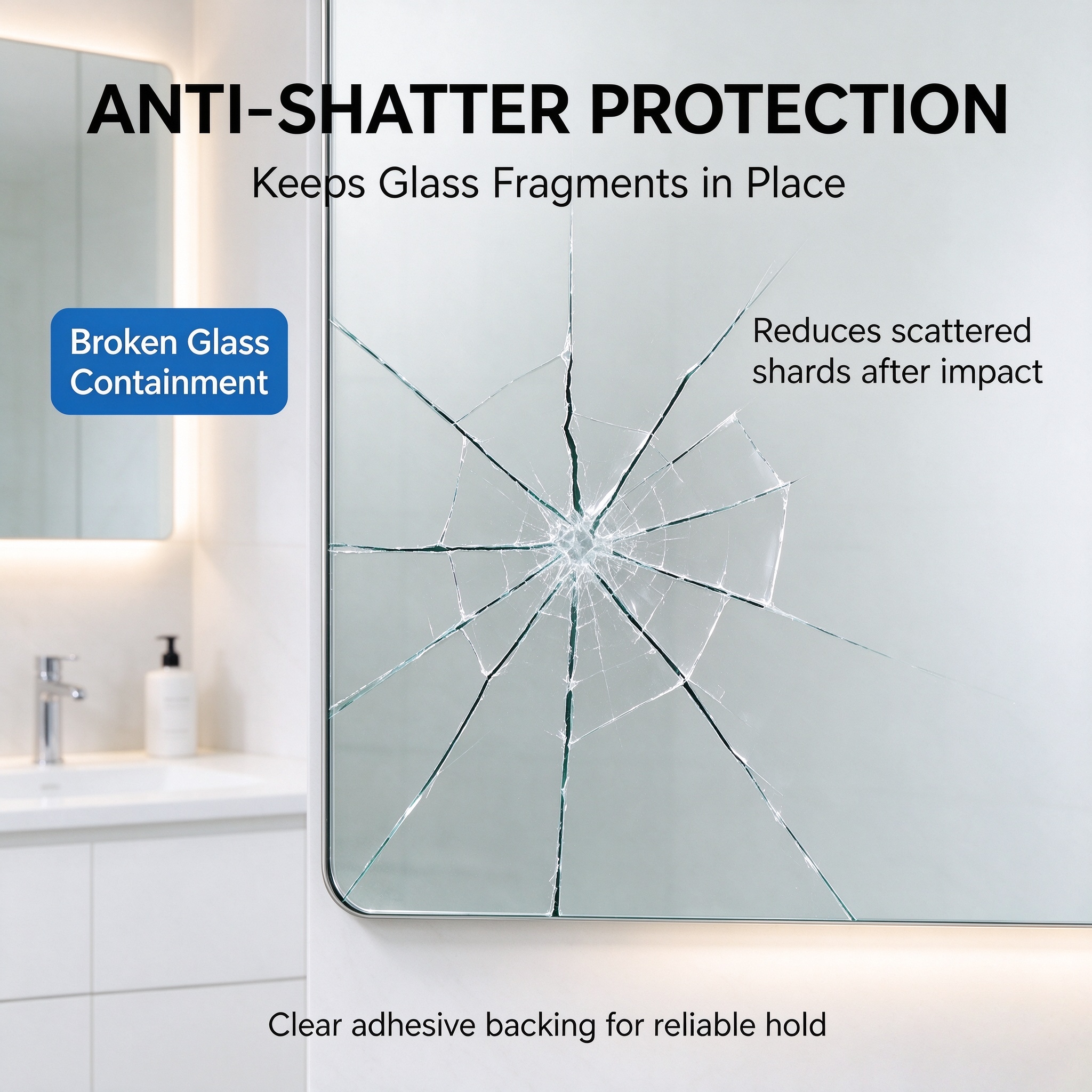
The table below outlines the core differences between standard window film and anti-burst film across the factors that matter most when choosing between them.
Feature | Standard Window Film | Anti-Burst Film |
|---|---|---|
Primary purpose | Heat, glare, and UV reduction | Impact resistance and shatter containment |
Typical thickness | 1.5–4 mil | 4–12+ mil |
Adhesive strength | Standard bonding | Reinforced, high-tensile bonding |
Impact performance | Limited | Exceeds national safety standards |
Best suited for | Everyday comfort and privacy | High-traffic, high-risk, or safety-critical areas |
Shatter behavior | Fragments may still separate | Glass fragments stay contained |
This comparison makes one thing clear: the two products solve different problems. Choosing between them comes down to whether your priority is comfort or physical safety — or, in many commercial and residential projects, both.
Anti-burst film tends to make the biggest difference in areas where broken glass poses a direct safety risk to people nearby. Bathrooms are a common example. Installing safety film for glass shower doors can prevent a cracked or shattered panel from sending sharp fragments across the floor, which is especially important in households with children or elderly residents.
Windows present a similar concern, particularly in ground-floor spaces, storefronts, and buildings located in storm-prone regions. Applying glass safety film for windows adds a layer of protection against accidental impact, severe weather, and even opportunistic break-ins, since intact film makes it significantly harder to gain quick entry through a broken pane.
Commercial buildings, schools, and high-rise properties also benefit from this added layer of protection, particularly in areas with heavy foot traffic or large glass partitions.


Not all anti-burst films perform equally, even when they're marketed similarly. Film thickness, adhesive quality, and manufacturing consistency all affect real-world performance. Mr.Film operates a dust-free production base equipped with automated coating machinery, which helps maintain consistent film quality across every batch produced.
The company's safety film has already protected more than two million households through its shower enclosure solutions, and it supports over five million square meters of door and window protection annually. These numbers reflect a track record built on repeat use across both residential and commercial projects, not a single product launch.
For businesses sourcing window film at scale, Mr.Film also offers OEM and ODM services, giving partners flexibility in branding and specification without compromising on the underlying film performance.
Standard window film and anti-burst film aren't competing products — they're built for different priorities. If your main concern is comfort, energy efficiency, or aesthetics, a standard film will likely meet your needs. But if safety is the priority, particularly in bathrooms, storefronts, or storm-exposed windows, investing in a purpose-built anti-burst film is the more responsible choice.
Before purchasing, ask for the film's impact resistance rating, thickness specification, and adhesive type. These details tell you far more about real-world performance than general marketing claims ever will.
Is anti-burst film more expensive than standard window film?
Generally, yes. The thicker construction and reinforced adhesive used in anti-burst film typically cost more than standard film, but the added safety performance often justifies the investment in high-risk areas.
Can anti-burst film be installed on existing glass without replacing it?
Yes. Anti-burst film is designed to be applied directly to existing glass surfaces, making it a practical upgrade without the cost of full glass replacement.
Does anti-burst film affect visibility or natural light?
Most anti-burst films are optically clear or near-clear, so they don't significantly reduce visibility or natural light compared to untreated glass.


