
Views: 0 Author: Site Editor Publish Time: 2026-09-17 Origin: Site
Solid surface countertops have become a go-to choice for kitchens, bathrooms, and commercial spaces because they combine a seamless look with impressive durability. Made from a blend of acrylic or polyester resins mixed with natural minerals, these countertops offer a non-porous surface that resists stains, moisture, and bacteria growth far better than many traditional materials.
But durability doesn't mean invincibility. Even the toughest solid surface countertop can suffer from scratches, heat marks, and dulling over time if it isn't cared for properly. That's where protective solutions come into play, helping homeowners and businesses keep their surfaces looking pristine for years without constant refinishing or replacement.
This post breaks down what solid surface countertops actually are, the everyday risks they face, and how the right protective approach can extend their lifespan and appearance.
Unlike natural stone or laminate, solid surface countertops are engineered materials. This means manufacturers can control consistency, color, and texture with a precision that natural materials simply can't match. The result is a smooth, uniform surface with no visible seams, which is one of the biggest reasons designers favor solid surface options for modern kitchens and bathrooms.
Because the material is non-porous, it doesn't require the periodic sealing that granite or marble countertops need. Spills wipe away easily, and the surface resists mold and mildew growth. Solid surface countertops also allow for integrated sinks and curved edges, giving designers more flexibility than they'd have with tile or laminate.
Despite their strengths, solid surface countertops aren't immune to damage. A few of the most common issues include:
Scratches from knives or abrasive cleaning tools: The surface can be scuffed if sharp objects are used directly on it without a cutting board.
Heat marks: While more heat-resistant than laminate, solid surface materials can still discolor or warp if hot pots and pans are placed directly on them.
Dulling over time: Repeated cleaning with harsh chemicals can strip the surface's shine, leaving it looking worn.
Chips at the edges: High-traffic areas, like kitchen islands, are more prone to accidental impact damage.
These risks are why many owners look for extra protection, particularly during renovations, moves, or high-use periods like holiday cooking seasons.
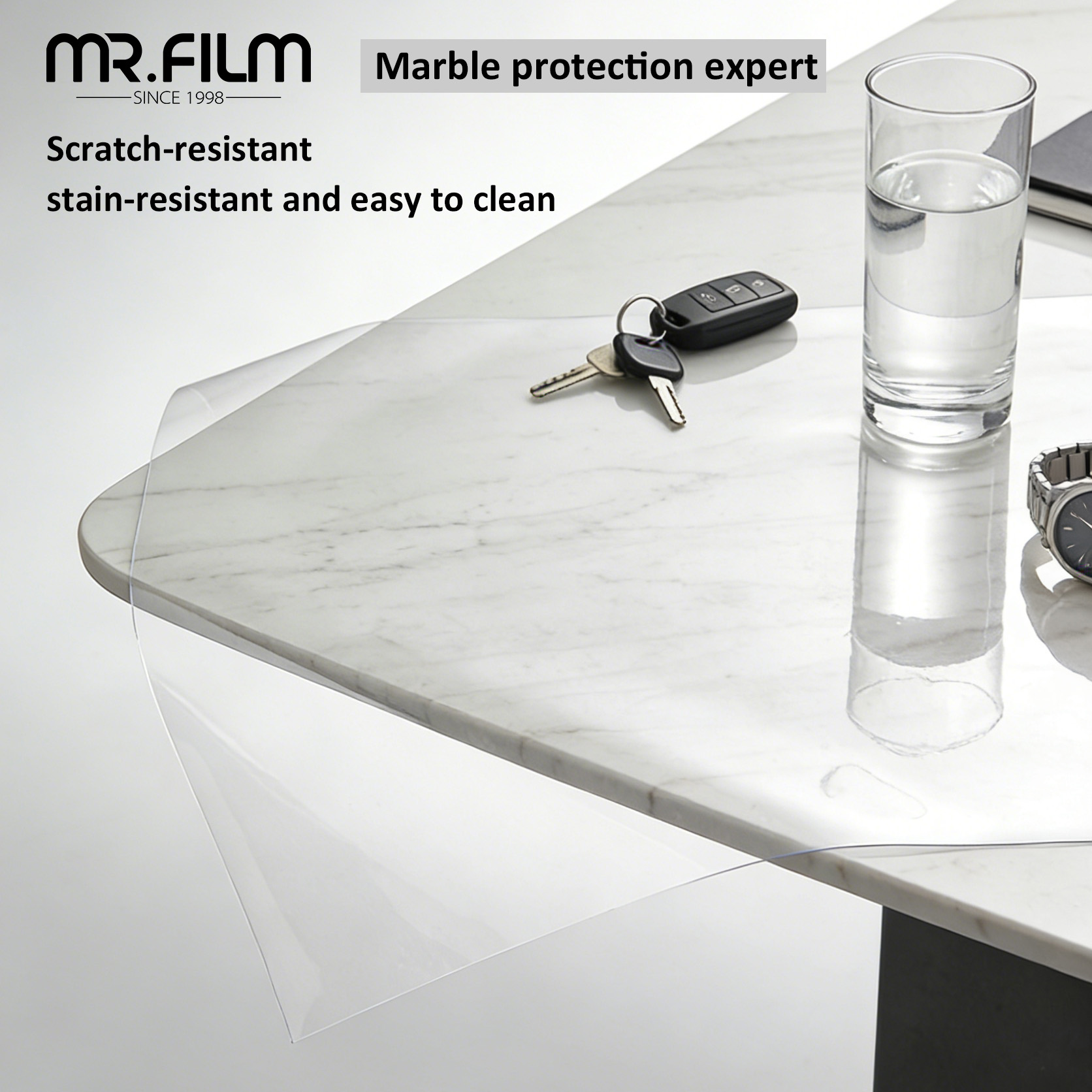
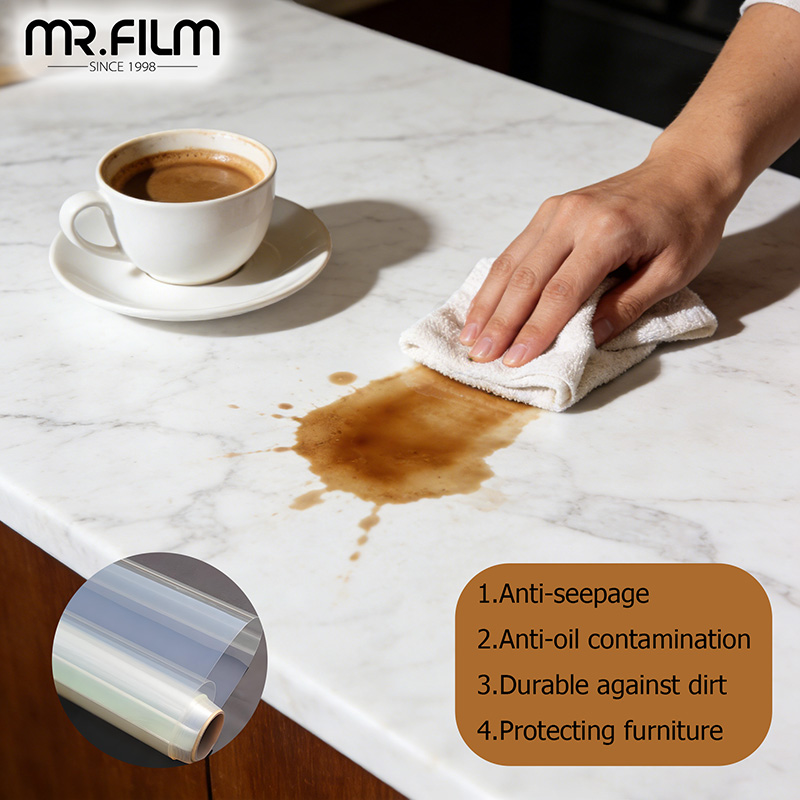
Applying a table protection film is one of the simplest ways to guard against everyday wear without altering the countertop's appearance. A quality film acts as an invisible shield, absorbing scratches, spills, and minor impacts before they reach the actual surface underneath.
This approach is especially useful during construction or remodeling projects, when countertops are exposed to dust, tools, and foot traffic long before a home is move-in ready. Contractors and homeowners alike use protective films to keep newly installed surfaces pristine until the space is fully finished.
For glass-topped tables or countertops with glass inlays, a glass table protection film offers similar peace of mind, preventing scratches and cloudiness while maintaining the transparency and shine that makes glass surfaces so attractive in the first place.
Choosing the right countertop material often comes down to balancing durability, maintenance, and cost. Here's how solid surface stacks up against a few common alternatives:
Material | Durability | Maintenance | Seamless Look | Repairability |
|---|---|---|---|---|
Solid Surface | High resistance to stains and moisture | Low; no sealing required | Yes, virtually seamless | Easily repaired by sanding |
Granite | Very durable, resistant to heat | Requires periodic sealing | No, visible seams | Difficult; often requires professional repair |
Quartz | Highly durable, scratch-resistant | Low maintenance | No, visible seams | Difficult; chips are hard to fix |
Laminate | Moderate durability | Low maintenance | No, visible seams | Cannot be repaired; must be replaced |
As the table shows, solid surface countertops stand out for their easy repairability and seamless design, making them a practical choice for spaces where a clean, modern look matters as much as long-term performance.
Not all protective films are created equal. The best options are thin enough to remain nearly invisible while offering real resistance to scratches, heat, and impact. Guangdong Mr.Film Photoelectric Technology Co., Ltd. has spent over 27 years developing film technologies for exactly this kind of application, backed by a dedicated research team and multiple patented formulas.
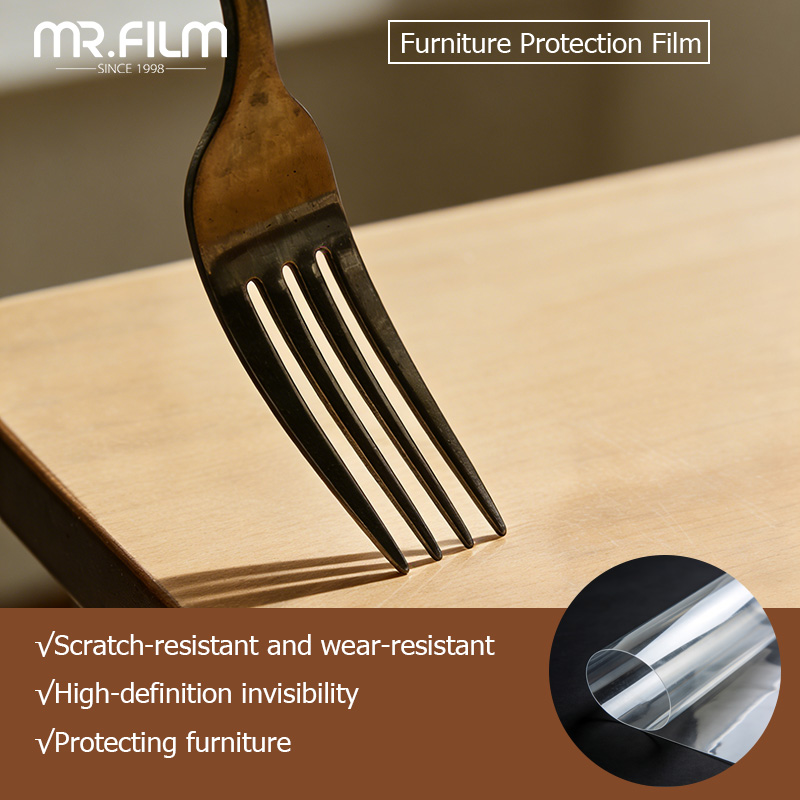
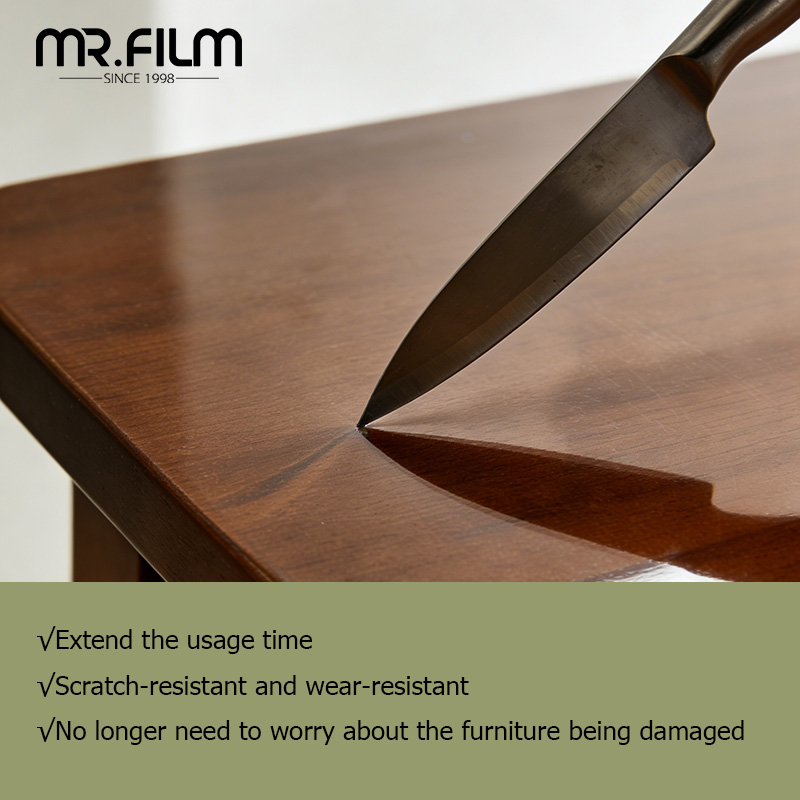
Their furniture protection film line was designed with everyday household and commercial use in mind, offering a practical way to safeguard countertops, tabletops, and other furniture surfaces during construction, moving, or daily use. Because these films are engineered to be removable without leaving residue, they're a low-commitment way to add an extra layer of defense to a surface that's often difficult and costly to replace.
For anyone investing in solid surface countertops, pairing that investment with a dependable protective film is a straightforward way to keep the surface looking new for much longer, without adding extra maintenance steps to an already busy routine.
Solid surface countertops offer a rare combination of style, durability, and easy upkeep, but that doesn't mean they should be left unprotected. Whether it's during a renovation, a big move, or simply daily wear from a busy household, a protective film can be the difference between a countertop that looks new for years and one that starts showing damage within months.
If you're weighing your options for keeping surfaces scratch-free and pristine, it's worth exploring protective film solutions built specifically for the job, rather than relying on the material's natural durability alone.
Are solid surface countertops more expensive than laminate?
Yes, solid surface countertops generally cost more upfront than laminate, but their durability and repairability often make them more cost-effective over time.
Can scratches on solid surface countertops be fixed?
Most minor scratches can be sanded out, which is one of the material's biggest advantages over quartz or granite.
Do solid surface countertops need to be sealed?
No. Unlike granite or marble, solid surface countertops are non-porous and don't require sealing.
How often should a protective film be replaced?
This depends on usage, but films are typically replaced during major cleanings, renovations, or when visible wear appears on the film itself rather than the countertop.


