
Views: 0 Author: Site Editor Publish Time: 2026-10-14 Origin: Site
A scratch on a glass coffee table or a water ring on a wood dining surface can turn a beloved piece of furniture into a daily source of frustration. Protective films have become one of the simplest ways to prevent this kind of wear without hiding the natural beauty of the material underneath. Whether you're furnishing a new home, running a busy restaurant, or managing a showroom full of display pieces, a thin, nearly invisible layer can mean the difference between furniture that lasts for decades and furniture that looks tired within a year.
This guide walks through why glass and wood surfaces are especially vulnerable, what qualities separate a durable film from a flimsy one, and how to pick the right option for your specific furniture. Along the way, we'll look at how manufacturers with decades of film-coating experience approach product development, so you know what to look for before making a purchase.
Glass tabletops are prized for their sleek, modern look, but that same smooth surface is also prone to scuffing, fingerprints, and impact chips. A single dropped mug or an accidental slide of a ceramic vase can leave a permanent mark. This is where a glass table protection film earns its keep — it absorbs minor impacts, resists fine scratches, and keeps the glass looking polished with far less maintenance than bare glass requires.
Wood surfaces face a different set of challenges. Heat from hot dishes, moisture rings from glasses, and UV exposure from sunlight all contribute to fading, warping, and discoloration over time. A properly applied film adds a buffer between the wood and these everyday hazards, helping the grain and finish stay vibrant well beyond what untreated wood typically manages.

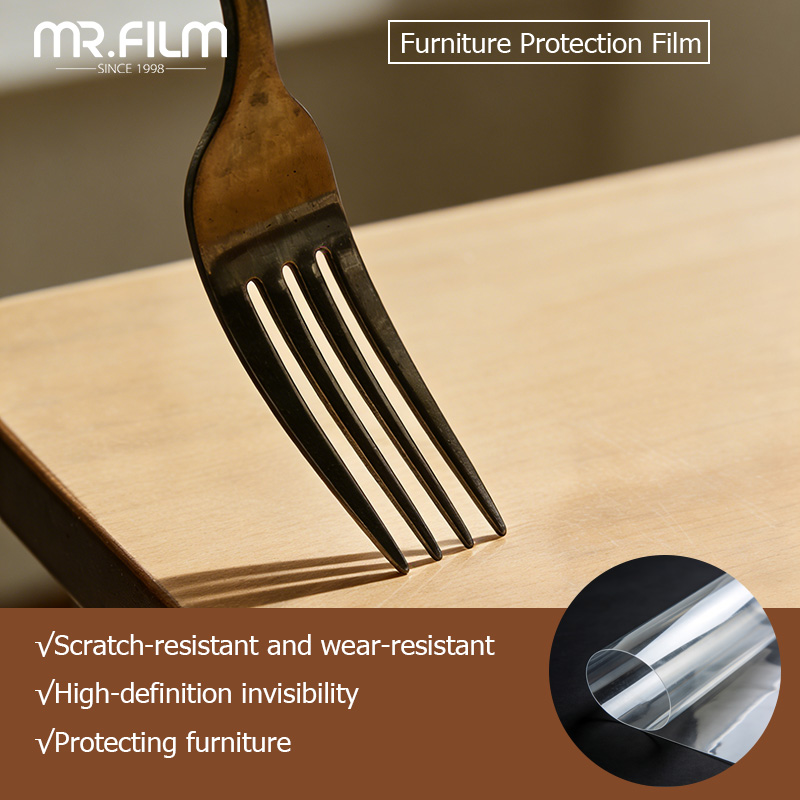
Not every protective film performs the same way, and the differences usually come down to a handful of measurable properties. A strong Furniture Protection Film should offer clear optical quality so it doesn't distort the surface underneath, reliable adhesion so it doesn't lift at the edges, and resistance to both abrasion and UV yellowing. Films that skimp on any of these properties tend to look cloudy, peel prematurely, or fail to stop everyday scuffs.


Property | Why It Matters | What to Look For |
|---|---|---|
Optical clarity | Keeps the natural material visible | Low haze percentage, minimal distortion |
Adhesive strength | Prevents lifting or bubbling at edges | Strong initial tack with residue-free removal |
Scratch resistance | Reduces visible surface damage | Hardened coating layer |
UV stability | Prevents yellowing and fading | UV-blocking additives |
Thickness | Balances durability with a seamless look | Typically 2–8 mil depending on use |
Comparing products against this table before buying helps narrow down options quickly, especially when shopping online where it's hard to test a sample in person.
Not all tables serve the same purpose, so the ideal film often depends on how heavily a surface gets used. A dining table that sees daily meals needs a different grade of protection than a decorative side table that mostly holds a vase or a lamp. Thicker, more impact-resistant options tend to suit high-traffic dining and office tables, while thinner, nearly invisible films work well for display furniture where appearance matters more than heavy-duty protection.
For anyone weighing options, a table protection film designed specifically for frequent handling will usually include reinforced adhesive backing and a slightly thicker profile compared to films made for decorative pieces. Matching the film to the actual use case prevents both overspending on unnecessary durability and underprotecting a surface that gets heavy daily use.


Wood grain surfaces benefit from films that mimic natural texture while adding a protective top coat, which helps maintain the tactile feel buyers expect from real wood. Glass and marble surfaces, on the other hand, usually call for films optimized for clarity and shatter resistance rather than texture replication. Checking the manufacturer's material compatibility notes before purchasing avoids mismatches that can affect both appearance and performance.
Film quality varies significantly across manufacturers, and the companies with the longest track records tend to invest the most in research and formulation. Guangdong Mr.Film Photoelectric Technology Co., Ltd, for example, has spent more than 27 years developing window and surface film technology, backed by over 40 in-house R&D specialists and three dedicated research centers. That level of investment has resulted in more than 130 national IP applications, including dozens of invention patents, which speaks to the depth of testing behind their formulations.
For furniture-specific applications, this kind of manufacturing background translates into films that hold up under repeated cleaning, resist yellowing from sunlight exposure, and maintain strong adhesion over years of use rather than months. Brands with dust-free production facilities and automated coating lines, like Mr. Film's, are generally better positioned to deliver consistent thickness and clarity across every roll, which matters more than most buyers realize until they compare a premium film side by side with a budget alternative.
Furniture represents a real financial and sentimental investment, and a thin protective film is a small step that pays off for years. Whether the priority is shielding a glass coffee table from everyday knocks or keeping a wood dining table free of heat rings and scratches, matching the film's thickness, clarity, and adhesive strength to the furniture's actual use case makes all the difference. Reviewing the comparison table above before buying, and favoring manufacturers with a proven R&D track record, puts the odds of a long-lasting result firmly in your favor.
How long does a protective film typically last on furniture?
Most quality films last several years with proper care, though lifespan depends on usage intensity, exposure to sunlight, and how the surface is cleaned day to day.
Can protective film be removed without damaging the furniture underneath?
Yes, films designed for furniture use residue-free adhesives that allow clean removal, provided they're taken off according to the manufacturer's guidelines.
Does adding a protective film change the appearance of glass or wood?
High-clarity films are designed to be nearly invisible, preserving the natural look of the material rather than altering its color or texture.
Is protective film suitable for both indoor and outdoor furniture?
Many films are formulated specifically for indoor use, while others include UV stabilizers suited to outdoor exposure, so checking the product specifications beforehand is important.


