
Views: 0 Author: Site Editor Publish Time: 2026-07-14 Origin: Site
Quick answer:
Nano Ceramic Solar Film uses ceramic nanoparticles to block infrared heat and UV radiation without interfering with electronics or darkening your view. Compared to dyed or metallic films, it offers superior heat rejection, longer durability, and clearer visibility — making it the top choice for both vehicles and buildings.
Not all window films are created equal. Walk into any tint shop or browse any supplier catalog, and you'll find dozens of options — dyed, carbon, metallic, hybrid, and ceramic. Each promises cooler interiors and UV protection. But only one consistently delivers on those promises over years of use.
Nano Ceramic Solar Film has earned its reputation not through marketing, but through measurable performance. It rejects more heat, lasts longer, and causes fewer signal interference issues than virtually any competing technology. For buyers who want results — not just promises — understanding what separates ceramic film from the rest is the first step.
This post breaks down exactly how nano ceramic technology works, where it outperforms the competition, and what to look for when sourcing it.
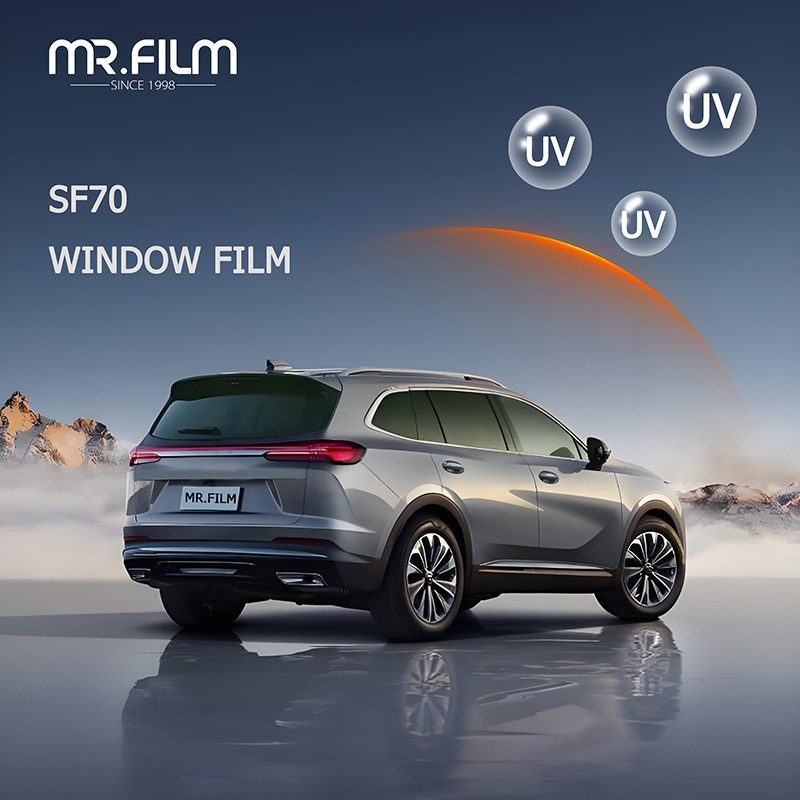
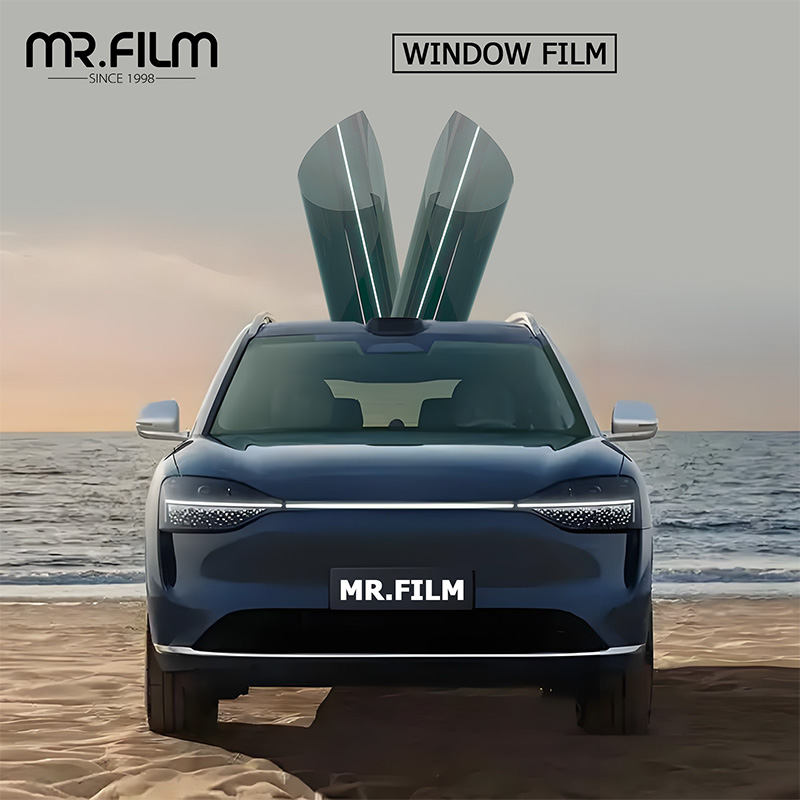
Standard dyed films absorb solar energy and gradually fade. Metallic films reflect heat effectively but block GPS, cellular, and Bluetooth signals. Nano ceramic films take a different approach entirely.
The technology embeds ceramic nanoparticles — typically titanium nitride or silicon nitride compounds — into a multi-layer film structure. These particles are non-conductive and non-metallic, which means they reject infrared radiation through selective absorption rather than reflection. The result: high heat rejection without the signal interference that plagues metallic alternatives.
Because the particles operate at the nanoscale, they don't scatter visible light the way larger particles would. Optical clarity stays high, even at films with strong infrared rejection ratings. That clarity matters in automotive applications, where driver visibility directly affects safety.
The gap between ceramic and non-ceramic films becomes obvious when you look at the key metrics that actually matter. Here's how nano ceramic film performs on its own — and why it consistently outranks every other category in real-world use.
| Performance Metric | Nano Ceramic Film Performance |
|---|---|
| IR Heat Rejection | 70–90% (top-tier) |
| UV Rejection | ≥99% |
| Signal Interference | None (metal-free) |
| Warranty Coverage | 8-Year Warranty |
For context, most dyed films deliver only 20–40% IR rejection, carbon films 40–60%, and even metallic films top out at 50–70% — all while introducing signal interference or shorter lifespans. The numbers tell the story clearly. On infrared rejection — the figure that actually determines how hot your interior gets — nano ceramic film outperforms every other category. And it does so without any of the signal issues that make metallic film a poor choice for modern, electronics-heavy vehicles.
Solar heat gain is the real enemy of interior comfort. When sunlight hits a window, infrared radiation passes through standard glass almost entirely unimpeded — that's the heat you feel even on a clear, cold day. A high-performance Nano Ceramic Tint can reject up to 90% of that infrared energy before it enters your cabin or building interior.
The practical effects compound quickly. A cooler interior means your air conditioning system works less hard. In vehicles, that translates to reduced fuel consumption. In commercial buildings, it can cut cooling energy costs by up to 35% — a figure that becomes significant across large glazed facades.
Beyond energy savings, lower interior temperatures reduce UV-related fading on upholstery, carpets, flooring, and furniture. The film itself acts as a UV barrier, blocking up to 99% of ultraviolet radiation regardless of film transparency level. High clarity films can deliver full UV protection without any noticeable darkening of the glass — a meaningful advantage for buildings where natural light and open aesthetics matter.
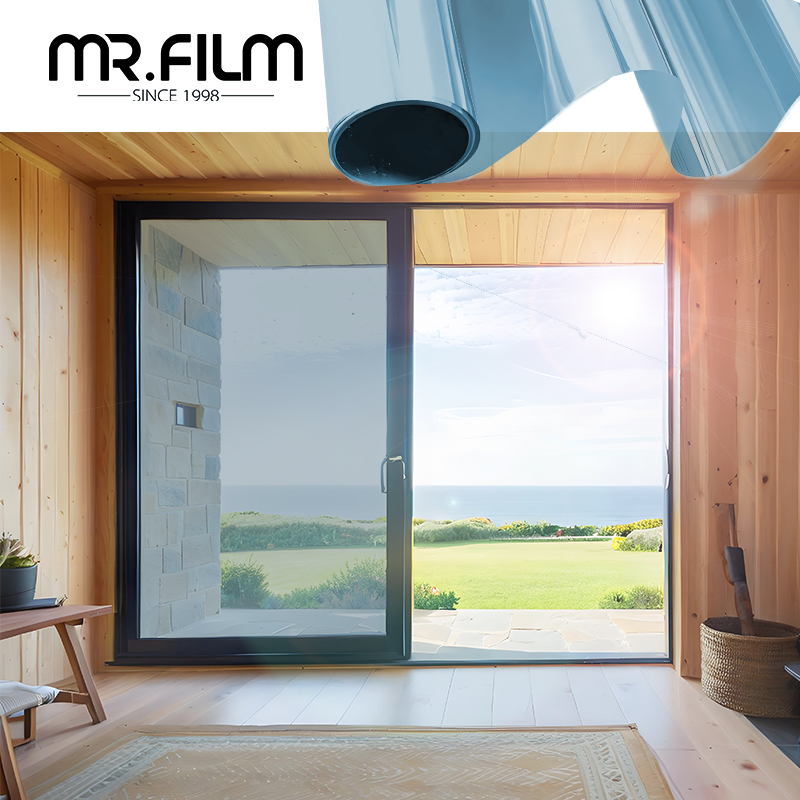
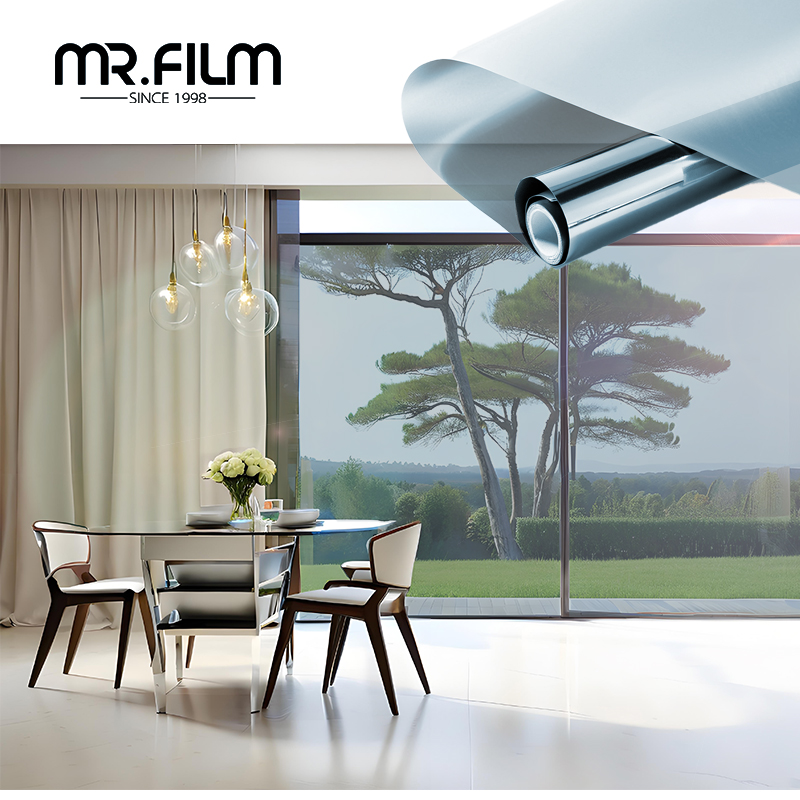
Guangdong Mr. Film Photoelectric Technology has spent over 27 years in the window film industry. That depth of R&D investment shows up directly in product performance.
Mr. Film's ceramic film products are engineered at the company's dedicated R&D centers, using proprietary nanoparticle formulations tested against national and international standards. The company's auto coating machines and dust-free production environment ensure consistent film quality across every batch — a factor that matters far more than most buyers realize. Inconsistent particle distribution is the most common cause of uneven heat rejection in lower-quality ceramic films.
For B2B buyers, Mr. Film also offers OEM and ODM services, meaning you can source ceramic film manufactured to your own specifications and branded under your label. The company currently serves more than 20 leading brands in the glass, shower door, and mirror industries — a track record that speaks to both production reliability and quality consistency.
Understanding what separates a quality ceramic product from an inferior one is easier when you know the common misconceptions — and nano ceramic window tint is no exception. Many buyers assume all ceramic films perform equally, when in reality, nanoparticle quality and film construction vary significantly between manufacturers.
A few technical specifications separate high-performing products from average ones:
IR rejection rate: Look for verified figures above 70%, ideally tested at the 900–1000nm wavelength range where solar heat is most concentrated
TSER (Total Solar Energy Rejected): A composite figure that accounts for infrared, UV, and visible light rejection — aim for 55% or higher
VLT (Visible Light Transmission): Confirm the film meets local legal requirements for your application
Warranty terms: Quality ceramic films should carry at least a 8-year warranty
Signal transparency: Confirm zero interference with GPS, cellular, and TPMS systems
Suppliers who can provide third-party test reports — not just marketing claims — are the ones worth shortlisting.
Does nano ceramic window film work on both cars and buildings?
Yes. Nano ceramic technology is used in both automotive and architectural applications. The film construction differs slightly between the two — automotive films prioritize flexibility and adhesion to curved glass, while building films are often thicker and optimized for larger flat surfaces — but the core ceramic nanoparticle technology is the same.
How long does nano ceramic film last compared to dyed film?
Quality nano ceramic film typically lasts 8 years or more with proper installation and care. Dyed films, by comparison, begin to fade and delaminate within 2 to 5 years. The longevity difference makes ceramic a more cost-effective option over a full product lifecycle.
Will nano ceramic film interfere with my car's GPS or phone signal?
No. Unlike metallic films, nano ceramic films use non-conductive ceramic particles that do not block or reflect radio frequencies. GPS, cellular, Bluetooth, and TPMS signals all pass through without interference.
Is nano ceramic film legal to use on car windows?
Window tint laws vary by country and region, typically specifying a minimum visible light transmission (VLT) percentage for different windows. The nano ceramic film itself is legal in most markets — what matters is choosing the correct VLT level for your jurisdiction. Your installer or supplier should be able to advise on compliant specifications.
Can I source nano ceramic film with custom branding?
Yes, manufacturers like Mr. Film offer OEM and ODM services that allow you to source ceramic film produced to your specifications and packaged under your brand. This is common among distributors, installers, and retailers who want a proprietary product line.
The window film market offers plenty of options, but the performance gap between nano ceramic and everything below it is too large to ignore. Higher infrared rejection, zero signal interference, UV blocking up to 99%, and a lifespan that routinely exceeds a decade — these aren't incremental improvements. They represent a fundamentally better product category.
For buyers who want a manufacturer with the R&D depth and production capacity to back those specifications, Mr. Film is worth a direct conversation. With 27 years of manufacturing experience, a dust-free production facility, and a patent portfolio that reflects genuine innovation, the company is positioned to supply ceramic film that performs as specified — batch after batch.
Contact Mr. Film at ella@mr-film.cn or visit gdmrfilm.com to request product specifications or a sample.


