
Views: 0 Author: Site Editor Publish Time: 2026-08-24 Origin: Site
Pull open a car door on a hot afternoon, and the wall of trapped heat that hits you tells the whole story. Standard window films might soften the blow a little, but drivers and building owners who have switched to ceramic technology report a noticeably different experience: cooler interiors, clearer views, and far less reliance on air conditioning. The science behind that difference is worth understanding, and so is knowing how to choose a product that actually delivers on its promises.
This post breaks down how nano ceramic solar film works, what sets it apart from older film technologies, and why the manufacturing quality of the film matters just as much as the technology itself.


Traditional window films relied on dyes or metallic layers to block sunlight. Dyed films absorb heat and degrade over time, often turning purple or bubbling after a few years of sun exposure. Metallic films perform better on heat rejection, but they interfere with GPS signals, mobile networks, and in-vehicle electronics, a significant drawback in modern vehicles.
Ceramic films solve both problems. Instead of metal or dye, they use nano-sized ceramic particles embedded within the film's layers. These particles are non-conductive and non-metallic, which means zero signal interference. They also remain chemically stable over time, so the film holds its clarity and performance for years without fading or degrading.
The "nano" in nano ceramic refers specifically to the particle size. Smaller particles create a denser, more uniform barrier across the film, which improves heat rejection consistency and optical clarity. A film using nano-scale ceramic technology typically outperforms one using standard ceramic in both infrared rejection and visible light transmission.
Window film specifications can feel overwhelming: VLT, TSER, IRR, UV rejection. Here's a straightforward breakdown of the metrics that matter most:
Metric | What It Measures | Typical Nano Ceramic Range |
|---|---|---|
VLT (Visible Light Transmission) | % of visible light that passes through | 15% – 70% |
TSER (Total Solar Energy Rejected) | % of total solar energy blocked | 50% – 80% |
IRR (Infrared Rejection) | % of heat-producing infrared rays blocked | 85% – 99% |
UV Rejection | % of ultraviolet rays blocked | 99%+ |
Signal Interference | Effect on GPS/mobile signals | None |
The IRR figure is particularly important. Infrared radiation is the primary source of heat buildup inside vehicles and buildings. A film with 95%+ infrared rejection keeps interiors significantly cooler without requiring a very dark tint, meaning you can maintain good visibility and natural light while still getting serious heat control.
UV rejection above 99% also protects interior materials. Car seats, dashboards, and furniture fabrics all degrade faster when exposed to ultraviolet light. High-quality ceramic film acts as a consistent barrier against that kind of long-term damage.
Ceramic film technology applies to both automotive and architectural settings, but the performance requirements differ. In vehicles, the priority is usually heat rejection, glare reduction, and maintaining clear sightlines for safe driving. Films need to withstand temperature extremes, vibration, and repeated cleaning without delaminating.
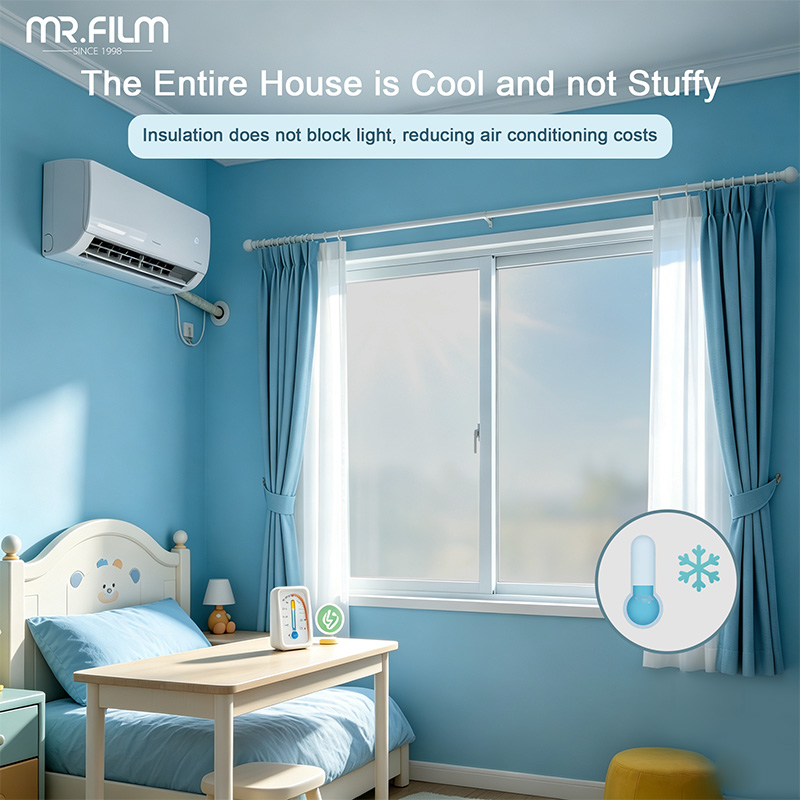
For buildings, the priorities often extend to energy efficiency over a longer timeframe. A quality ceramic solar film applied to commercial or residential glazing can reduce cooling loads substantially, some estimates put HVAC savings at up to 30–40% during peak summer months. In larger buildings, that translates directly into measurable operational cost reductions.
Both applications benefit from the optical clarity that ceramic films provide. Unlike older metallic films that gave windows a noticeably reflective or mirror-like appearance, ceramic films tend to look cleaner and more neutral, preserving the original aesthetic of the glass.

The technology is only part of the equation. Two films can both claim "nano ceramic" construction and perform very differently in practice. The difference usually comes down to manufacturing precision, specifically, how uniformly the ceramic particles are distributed across the film and how well the layers are bonded together.
Poorly manufactured ceramic film may have inconsistent particle distribution, leading to uneven heat rejection across the glass surface. It may also delaminate faster, especially in climates with high humidity or frequent temperature swings.
MR.FILM has been manufacturing window films since 1998, and the company's production infrastructure reflects that depth of experience. With over 40 R&D experts, three dedicated research centers, and 135 national intellectual property applications, including 47 invention patents, the brand brings serious technical capability to every product it produces. Films are manufactured in a dust-free production environment using automated coating machines, which significantly reduces the variability that degrades performance in lower-quality alternatives.
That level of quality control is what separates a film that performs as advertised from one that fades, bubbles, or loses its heat-rejection properties within a few years.
Not every ceramic film is the right choice for every situation. Here are a few practical guidelines:
For daily drivers in hot climates: Prioritize IRR above 90% and choose a VLT that meets local tinting regulations. A good ceramic car tint in the 35–50% VLT range typically balances heat rejection with legal compliance and clear visibility.
For commercial buildings: Look for a high TSER rating combined with low interior reflectivity. This keeps the building cooler without creating glare problems for occupants or creating an unwanted mirror effect on the exterior.
For residential windows: UV rejection and glare control often matter as much as heat rejection. A lighter VLT (60–70%) can protect furnishings and reduce eye strain while keeping the room bright and open.
For premium performance in any setting: Prioritize films that specify nano-scale ceramic particles rather than generic "ceramic" construction, the particle size directly affects the quality of infrared blocking.
Ceramic window film costs more upfront than dyed or standard metallic alternatives. Over a three-to-five year horizon, however, the math typically shifts. Lower energy bills, reduced UV damage to interiors, longer film lifespan, and zero signal interference all contribute to a better return on the initial investment.
The key is sourcing film from a manufacturer with both the R&D depth and the production standards to back up their performance claims. MR.FILM's 27-year track record and its investment in verified intellectual property and quality-controlled manufacturing put it in a category that casual window film suppliers simply cannot match.
If you're evaluating ceramic film options for a vehicle fleet, a commercial building, or a residential project, MR.FILM offers products across all of these categories. Contact their team directly to discuss specifications, customization options, and volume pricing.


