
Views: 0 Author: Site Editor Publish Time: 2026-06-30 Origin: Site
Yes, ceramic window film's original cost is higher than normal sunshade options, but for most drivers who pursue obvious comfort and protection, this investment having clear value. Industry consensus among automotive professionals confirms that ceramic film is famous for excellent heat insulation performance, UV protection, durability, and signal system compatibility, and its price advantages have been fully proven. However, the value is not suitable for all situations, it depends on local climate, driving habits, and vehicle ownership horizon.
This article provides an evidence-based analysis of what you get for the additional cost, drawing on documented performance data and industry testing to help you determine whether Mr. Film's ceramic window tintrepresents a worthwhile investment for your specific needs.
Ceramic window film's prices usually higher than dyed or metallic alternatives for 40% to 70%. For standers car, it means that the price difference is several hundred dollars compared to entry-level diaphragms.
The prices differential reflects fundamental differences in materials and manufacturing process:
Cost Component | Dyed/Metallic Film | Mr. Film Ceramic Film |
Material composition | Dye layers or metal particles | Nano-ceramic particles |
Manufacturing complexity | Lower | Higher,precision nanotechnology |
Warranty coverage | Limited (2-5 years typical) | Extended (8+ years) |
The key question is not whether ceramic film costs more—it does. The question is what that additional investment buys.


Ceramic window film uses non-metallic nano-ceramic particles that block 80%-90% IR, and infrared (IR) radiation is mainly consists of the solar heat energy. The independent test confirms this performance advantage:
①Standard dyed films: Limited heat insulation, usually 10–30% TSER (Total Solar Energy Rejection).
②Mr.Film's ceramic film: High TSER, usually reflects most solar energy and keep visible light transmission at the same time.
The real effect measure: Under the same parking conditions, a vehicle's interior temperature with ceramic film is 7-10°C lower than standard film. That directly means:
①Faster cabin cool-down
②Reduced air conditioning workload
③Lower fuel consumption in conventional vehicles
④Extended driving range for EVs
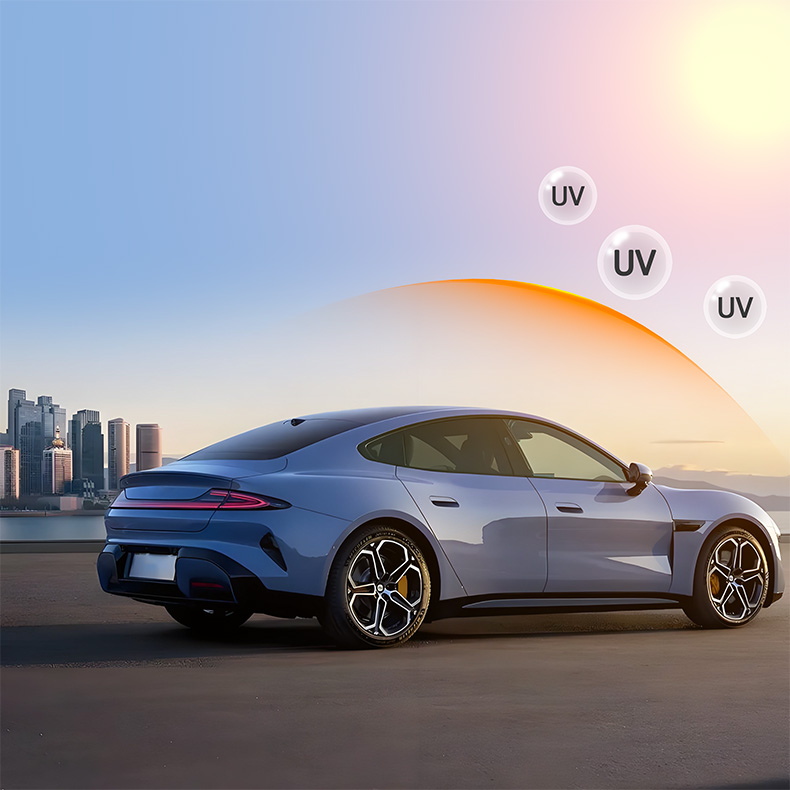
Although most films claim UV protection, the performance stability is different. Mr.Film's ceramic product blocks over 99% of UVA and UVB rays. This has two critical meanings:
①Skin protection: The Skin Cancer Foundation recommends that window film is an effective method to reduce UV exposure during driving. Using ceramic film, the protection effect is continuous and does not require reapplication.
②Interior preservation: UV rays are the primary reason caused of dashboard cracking, upholstery fading, and material degradation. Documented evidence shows that ceramic film slow this deterioration significantly compared to dyed films, which can fade within months.

Metallic films contain conductive metal particles that can disrupt GPS, cellular, and radio signals. Ceramic film are non-metallic and non-conductive, ensuring full signal strength for all devices. For modern vehicles with electronic systems, this is a non-negotiable advantage.
Advantage | Benefit to Vehicle Owner |
Superior Heat Rejection | Blocks 80–90% of infrared heat for a consistently cooler cabin |
99%+ UV Protection | Shields skin from harmful rays and prevents interior fading |
No Signal Interference | Non-metallic construction preserves GPS, radio, and phone signals |
Exceptional Optical Clarity | Maintains clear, distortion-free visibility in all lighting conditions |
Fade-Resistant Durability | Dye-free ceramic particles prevent purple discoloration and bubbling |
Extended Lifespan | Engineered for 8+ years of reliable, consistent performance |
Energy Efficiency Support | Reduces AC load, contributing to fuel savings and EV range retention |
Although ceramic film's high-end features are reliable in many applications, the value is particularly prominent under specific driving environments and usage modes. For drivers who fall into these categories, the return on investment is measurably higher:
①Hot sunny climates: In the long-tern direct sunlight and high temperature areas, the heat rejection capability of ceramic film delivers tangible comfort and energy savings. The air conditioning system operates less aggressively, improving fuel economy or EV range.
②Frequent highway driving: Vehicles traveling at speed receive constant solar exposure through large glass surfaces. Ceramic film reduces driver fatigue by minimizing radiant heat and glare, enhancing safety over long distances.
③Family vehicles with children and pets: Passengers in rear seats especially children and pets are more easily damaged by high temperature and UV rays. Ceramic film blocks over 99% of UV rays, and provides all passengers extra protection.
④Electric or hybrid vehicles: Every kilowatt saved from air conditioning extends the battery’s usable range. Ceramic film directly contributes to EV efficiency by reducing the thermal load on the climate control system.
⑤Long-term ownership: For drivers planning to keep their vehicle for 5+ years, the extended lifespan and fade-free appearance of ceramic film offer superior long-term value compared to conventional films that degrade and require replacement.


Q: How much more does ceramic tint cost than standard options?
A: Normally 40-70% more expensive than dyed or metallic films. For vehicles, it may be equivalent to a difference of several hundred dollars. The exact amount depends on car size and film's color.
Q: Does darker tint mean better heat rejection?
A: Not necessarily. Heat insulation effect depends on the film's IR rys blocking technology, not non-visible darkness. A light-colored ceramic film (70% VLT) can reject more heat than dark color film (20% VLT).
Q: How do I know if the ceramic film I'm buying is genuine?
A: Look for documented specifications including IR rejection percentage, UV protection claims (99%+), and warranty terms. Legitimate ceramic films from reputable sources provide this information transparently.
Contact us now:
Website: https://www.gdmrfilm.com
Email:ella@mr-film.cn
Phone: +86-13802606784


