
Views: 0 Author: Site Editor Publish Time: 2026-08-07 Origin: Site
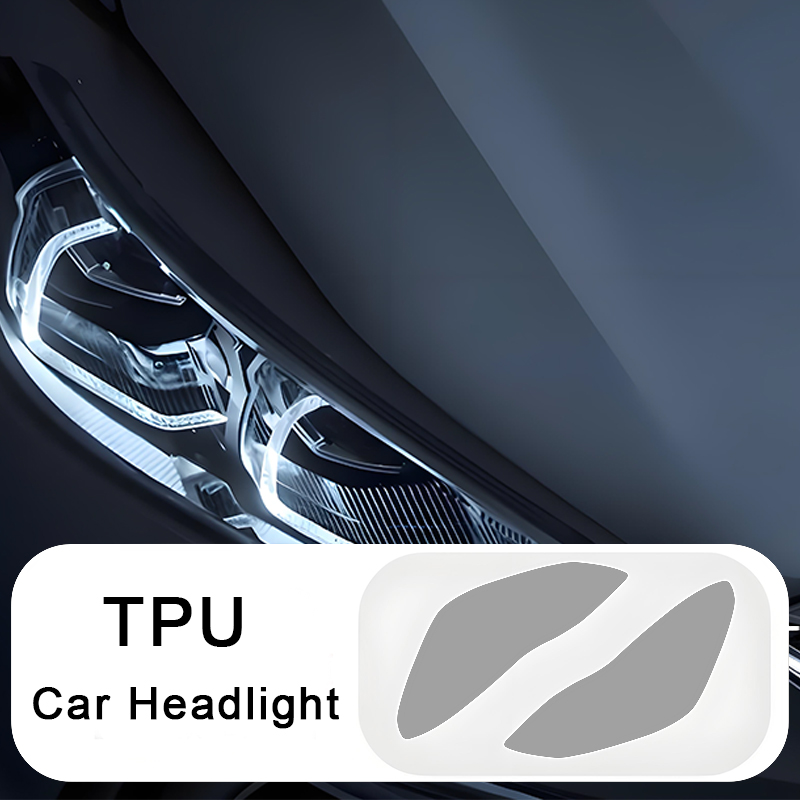
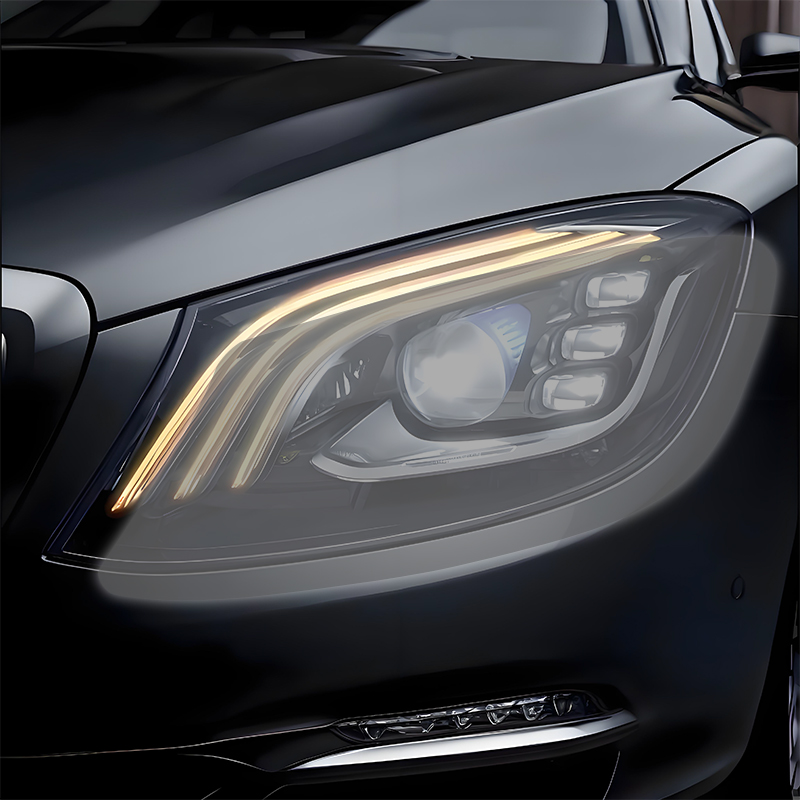
Yes, paint protection film (PPF) can be use in applied to headlights and taillights, and this application is became a standard methods in automotive protection industry. Industry product specifications confirm that PPF is suitable for headlights, taillights, fog lights, and reflectors. Mr.Film's TPU-based paint protection films are designed with the flexibility and optical clarity required for light housings, providing protection against stone chips, UV damage and yellowing while keeping light output.
The key difference in headlight PPF is the balance between protection and light transmission. A film that is reasonably designed can preserve illumination performance while protecting the lens from the road debris and environmental degradation.


Headlight lenses face constant exposure to damaging elements:
l Road debris: Sand, rocks, and salt create a "sandblasting" effect that pits and chips the lens surface over time
l UV radiation: Sunlight causes oxidation, yellowing, and hazing that drastically reduces headlight brightness and performance
l Chemical exposure: Bug acids, road chemicals, and bird droppings can etch and stain plastic lens materials
l Industry data indicates that this damage accumulates progressively, leading to reduced light output, a direct safety concern for night driving
Protection Aspect | Function |
Impact resistance | Absorbs and disperses energy from stone strikes |
UV blocking | Prevents yellowing and oxidation of lens material |
Self-healing | |
Chemical resistance | Protects against staining and etching |
Preserves clarity | Maintains light transmission, unlike unprotected lenses that haze |
Material Properties
Headlight applications demand specific properties that differ from standard body PPF:
Property | Headlight Requirement | Why It Matters |
Optical clarity | >90% light transmission | Preserves headlight output for safety |
Elasticity | High stretch, conforms to complex curves | Headlights have 3D contours |
Yellowing resistance | Anti-yellowing rating <0.7 ΔE | Maintains lens appearance and light output |
Self-healing | Scratch recovery with heat | Keeps lens clear over time |
Adhesion | Reliable bond to polycarbonate | Prevents peeling at edges |
Mr. Film's TPU-based PPF products exhibit high tear strength and are formulated to conform to complex curves , meeting the specific demands of headlight geometry.
For clear protection films, light transmission typically exceeds 90%. For tinted films, the transmission varies:
Film Type | Approximate Light Transmission | Best Use |
Clear (un-tinted) | >90% | Maximum visibility, factory look |
Light tint (H50) | ~50% | Subtle styling with retained output |
Medium tint (H35) | ~35% | Smoked look with adequate output |
Dark tint (H25) | ~25% | Bold styling, reduced light output |
Important consideration: Some tinted headlight films are not suitable for night driving in low-light conditions. Industry guidance recommends 30% transmission as the threshold for safe night driving.
Headlight PPF installation differs from flat body panels. The complex 3D curves of lighting assemblies require specific techniques:
l Wet installation method is preferred for precise positioning
l Heat activation is required to conform film to contours
l Edge management must be precise to prevent lifting
Mr.Film products are manufactured with self-adhesive backing suitable for both professional and experienced DIY application .
Headlight PPF can be applied to:
l Polycarbonate (plastic) headlights and taillights
l Glass-covered lighting assemblies (less common)
l Fog lights and side marker lights
The film adheres effectively to smooth, clean surfaces and can be removed later without damaging the lamp surface.


Q: Will applying PPF to headlights reduce light output?
A: Clear PPF maintains >90% light transmission, the reduction is imperceptible to the human eye. Tinted films reduce output proportionally; for night driving, industry sources recommend films with at least 30% light transmission.
Q: Can PPF be applied to curved headlight housings?
A: Yes. TPU-based films are engineered with high elasticity and conform to 3D curves with heat activation . Mr. Film's TPU products are designed for complex vehicle contours.
Q: How long does headlight PPF last?
A: Mr. Film's TPU products are rated for 3+ years of UV resistance and impact protection . It is depending on the product and environmental exposure.
Q: Does the film protect against yellowing?
A: Yes. Quality PPF includes UV inhibitors that block 99%+ of ultraviolet radiation , preventing the oxidation that causes yellowing and hazing of polycarbonate lenses.
Q: Can I apply the film myself?
A: While possible for experienced DIYers, professional installation is recommended. Industry sources note that proper installation of headlight PPF requires training and experience to achieve bubble-free, conformal fit on complex surfaces.
Q: Will the film damage the headlight when removed?
A: No. Quality PPF removes cleanly without residue when properly applied and removed . Heat-assisted removal is recommended to soften the adhesive.


