
Views: 0 Author: Site Editor Publish Time: 2026-11-27 Origin: Site
Glass storefronts, elevator panels, and transit shelters take a beating from more than just weather. Etching tools, markers, and acid-based paints turn pristine glass into a costly repair bill overnight. Property managers and glass fabricators increasingly turn to anti graffiti temporary glass protection film as a frontline defense, because replacing an entire glass panel after a single vandalism incident is far more expensive than applying a sacrificial layer that can simply be peeled away and swapped out.
This shift matters for a simple reason: glass is rarely vandalized once. High-traffic retail corridors, public transportation hubs, and multi-unit residential buildings report repeat incidents, sometimes within the same month. A removable film absorbs the damage instead of the glass substrate itself, which means facility teams spend their budget on film replacement rather than full pane installation, labor crews, and the downtime that comes with it.
For architects, distributors, and B2B buyers sourcing glass protection at scale, the real question isn't whether film helps. It's which type of film delivers the right balance of durability, cost, and ease of application for a given project. This article breaks down how anti-graffiti glass film works, where it fits against alternatives, and what to look for when selecting a manufacturing partner for large-volume orders.
Flat, reflective glass is an easy canvas. Storefront windows, mirrored elevator interiors, and bus shelter panels sit in public view around the clock, often unmonitored during off-hours. Etching cream, keys, and sharp tools can permanently damage float glass in seconds, and once the surface is scored, the only fix is full replacement.
Retail glass doors, subway and bus shelter panels, elevator cabs, and restroom mirrors in public buildings see the highest incident rates. These are also the surfaces where downtime is most expensive, since a damaged storefront window or transit panel often needs same-day repair to avoid safety hazards or lost business.
Not every protective layer serves the same purpose. Permanent coatings are bonded for long-term optical or security performance, while sacrificial films are engineered to be removed and reapplied as damage accumulates. Choosing between them depends on traffic volume, budget cycle, and how frequently a surface faces exposure to vandalism or abrasion.
Factor | Sacrificial/Removable Film | Permanent Coating |
|---|---|---|
Primary purpose | Absorbs scratches, etching, and graffiti damage | Long-term UV, glare, or security reinforcement |
Replacement cost | Low film swap only | High full glass or coating removal |
Typical lifespan | 6–24 months depending on exposure | 5–15 years |
Best suited for | High-vandalism, high-traffic public areas | Stable, lower-risk environments |
Installation speed | Fast, minimal downtime | Slower, often requires glass removal |
For facilities that experience repeat vandalism, a removable approach consistently reduces lifetime glass-maintenance costs because the labor-intensive step, full pane replacement, happens far less often.
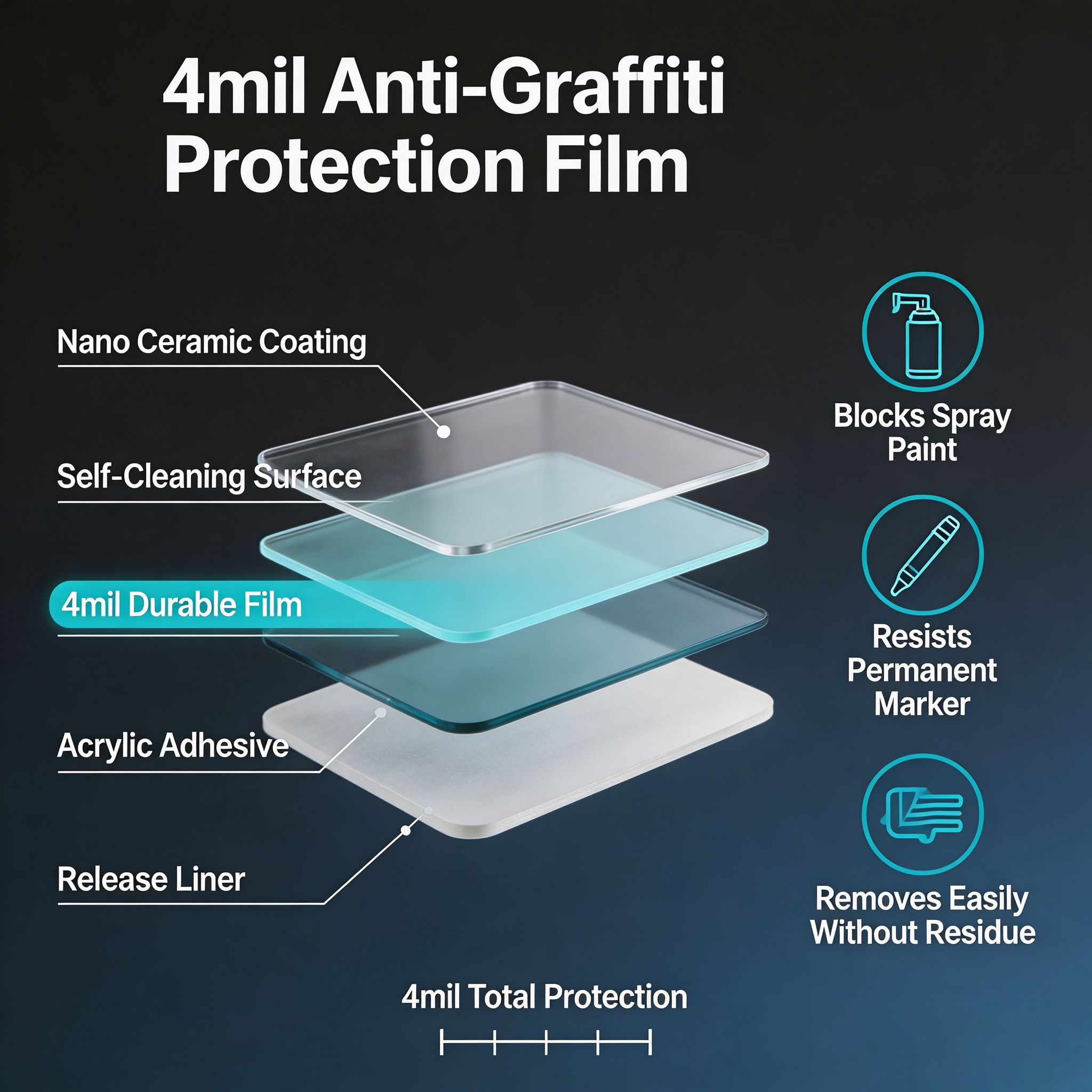
The mechanism is straightforward. A multi-layer polyester film is laminated onto the glass surface, creating a buffer zone between any sharp object or corrosive chemical and the glass itself. When vandalism occurs, the film takes the hit: scratches, etching marks, and paint all sit on a layer that technicians peel away and replace, leaving the original glass untouched underneath.
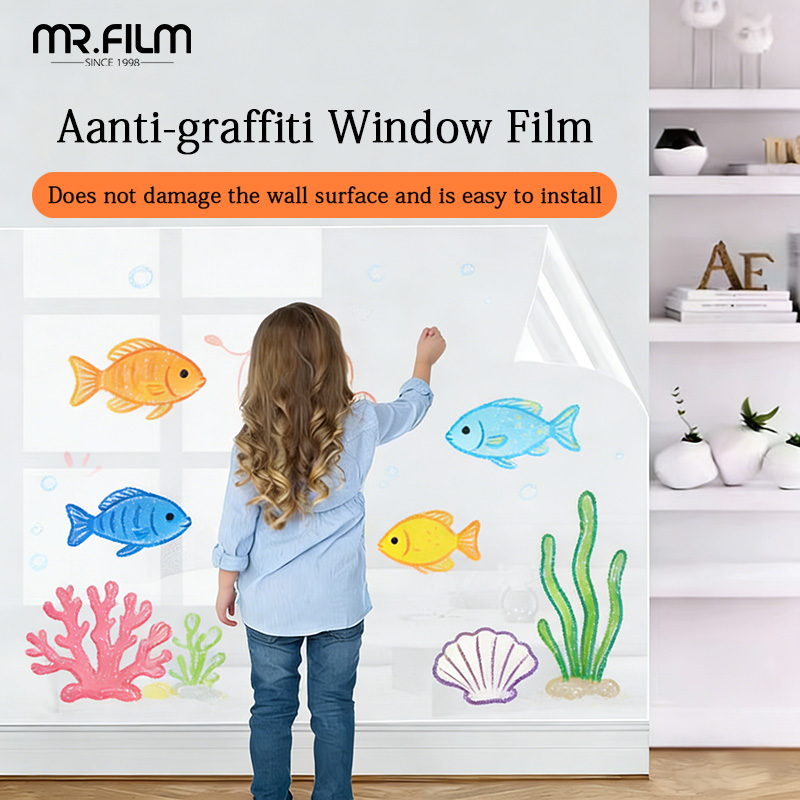
This is also where anti-graffiti window film differs meaningfully from standard safety or tint films. Anti-graffiti variants are formulated with a harder top coat specifically to resist etching compounds and solvent-based markers, while still maintaining enough optical clarity that the protected surface looks unaltered to the public. Facility teams get the visual quality of untouched glass with a built-in, swappable damage buffer underneath.
Optical clarity, UV stability, and adhesive residue-free removal are the three specifications that matter most for public-facing glass. A film that clouds, yellows, or leaves adhesive behind after removal creates a different maintenance headache than the one it was meant to solve, so sourcing from a manufacturer with documented performance testing is worth the extra diligence.
Glass fabricators, distributors, and facility management companies sourcing film at volume need more than a product spec sheet, they need a manufacturing partner with consistent output, certification backing, and the flexibility to support custom widths or OEM branding.
Guangdong Mr.Film Photoelectric Technology Co., Ltd has spent 27 years building exactly that kind of operation. Backed by more than 40 core R&D engineers, three dedicated research centers, and an intermediate test base, the company holds 135 national IP applications, including 47 invention patents, along with 107 authorized intellectual property rights. Production runs through a dust-free facility equipped with automated coating machinery, which keeps film consistency high across large batch orders, a detail that matters when a single commercial project might require thousands of square meters of matching film.
Beyond manufacturing capacity, the company supports OEM and ODM arrangements, making it a practical option for distributors who need private-label Anti-graffiti Film under their own brand, alongside qualification certification that procurement teams typically require before approving a new supplier. For buyers managing recurring vandalism-prone sites, that combination of scale, certification, and customization reduces the friction of switching suppliers mid-project.


Vandalism on commercial glass is rarely a one-time event, which makes a sacrificial, removable film strategy more cost-effective over the life of a property than repeated full-pane replacement. The decision comes down to matching film specification such as clarity, adhesive performance, and durability to the actual traffic and risk profile of each surface, then sourcing from a manufacturer that can maintain consistency across large orders.
For procurement teams evaluating options, request sample panels, ask for documented etching and solvent-resistance test results, and confirm production capacity before committing to a full building or fleet rollout.
How long does protective glass film typically last before replacement?
Depending on exposure level and traffic volume, removable protective film generally lasts around a year before replacement is needed.
Does protective film affect the clarity or appearance of glass?
High-quality film is engineered for optical clarity, meaning properly installed film should not noticeably alter how the glass looks to the public.
Is removable film suitable for exterior storefront glass?
Yes, exterior-grade films are formulated with UV stability to withstand outdoor sun exposure without yellowing or degrading prematurely.
Can protective film be customized for bulk commercial orders?
Manufacturers offering OEM and ODM services can produce custom widths, thicknesses, and private-label packaging for distributors and large-scale buyers.


