
Views: 0 Author: Site Editor Publish Time: 2026-11-07 Origin: Site
Fog on glass is one of those small annoyances that causes big headaches. A foggy bathroom mirror, a hazy windshield, or a clouded display case can turn a simple task into a frustrating one. That's why more manufacturers, builders, and retailers are turning to specialized coatings designed to keep glass surfaces clear, no matter the humidity or temperature swings around them.
Choosing the right anti fog film supplier matters more than most buyers realize. Not every film performs the same way, and not every manufacturer has the production capability or quality control to back up their claims. This post breaks down how anti-fog technology works, what to look for in a supplier, and why the right partnership can make a measurable difference in product performance.
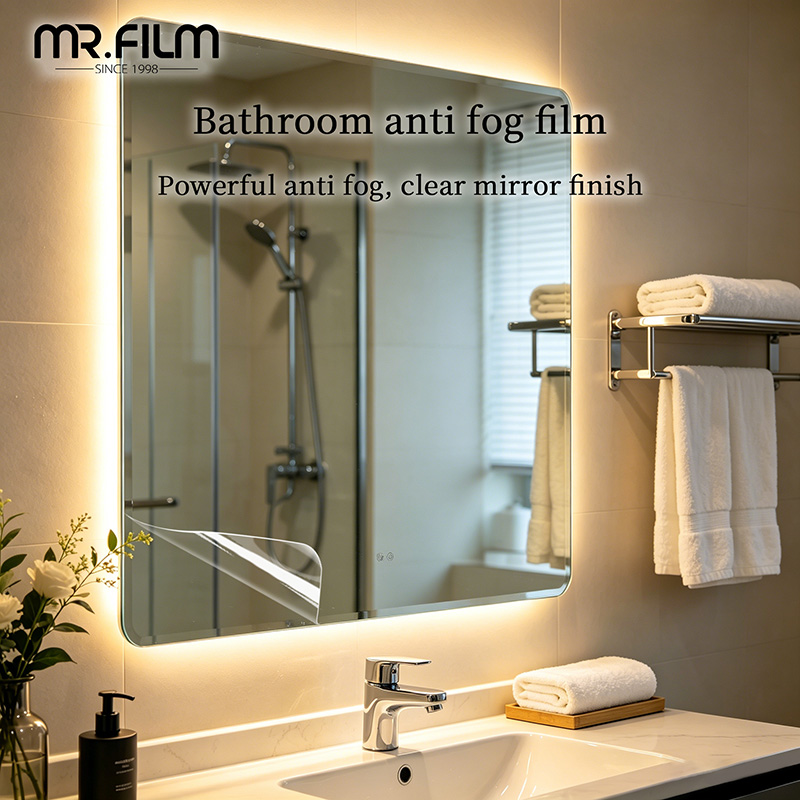

Fogging happens when warm, moist air meets a cooler glass surface. The temperature difference causes water vapor to condense into tiny droplets, scattering light and creating that familiar hazy film. This is common in bathrooms, car windshields, refrigeration units, eyewear, and any environment where humidity and temperature shift quickly.
Left untreated, this condensation can obscure visibility, damage surrounding materials over time, and even create A blurred rear-view mirror in heavy rain is not a cosmetic problem. That's where surface treatments come in, offering a practical fix without requiring constant wiping or ventilation adjustments.
Most fog-prevention solutions rely on one of two approaches: hydrophilic or hydrophobic coatings.
Hydrophilic coatings attract water molecules and spread them into a thin, even layer across the surface instead of letting them form droplets. Because the water spreads flat rather than beading up, light passes through more clearly, and the surface stays transparent even in humid conditions.
Hydrophobic coatings work the opposite way. They repel water entirely, causing it to bead and roll off the surface before it has a chance to condense into a foggy layer. Both methods are effective, though the right choice often depends on the specific application and environment.
When applied correctly, a quality coating can noticeably extend the clarity and lifespan of glass products. This is particularly valuable for industries like automotive, construction, and food service, where visibility and presentation directly affect user experience and safety.
The table below outlines the general differences between the main types of fog-prevention technologies used across industries today.
| Treatment Type | Mechanism | Typical Applications | Durability |
|---|---|---|---|
| Hydrophilic coating | Spreads moisture into a thin, even layer | Bathroom mirrors, display cases, helmet visors | Moderate to long-lasting with proper care |
| Hydrophobic coating | Repels water, causing it to bead and roll off | Vehicle side mirrors, outdoor signage | Long-lasting, resistant to wear |
| Surfactant spray | Temporarily reduces surface tension | Household mirrors | Short-term, requires reapplication |
| Laminated film layer | Permanently bonded coating applied during manufacturing | Rear-view mirrors, freezer and refrigerator doors, helmet visors | Long-term, built for repeated exposure |
As the table shows, permanently bonded coatings tend to offer the most reliable long-term performance, which is why many manufacturers prefer working with an established film producer rather than relying on surface sprays that wear off quickly.
Not all coatings are created equal, and the quality of a finished product often comes down to the manufacturer behind it. A few factors separate reliable producers from the rest:
Research and development capability. Companies with dedicated R&D teams and testing facilities are better equipped to refine formulas for different climates and applications.
Manufacturing environment. Dust-free production lines reduce the risk of contamination, which directly affects the clarity and consistency of the finished film.
Certifications and quality standards. Established qualification certificates signal that a manufacturer has met recognized industry benchmarks.
OEM and ODM flexibility. Businesses with custom requirements benefit from suppliers who can adapt formulations and packaging to specific needs rather than offering a one-size-fits-all product.
These details might seem technical, but they translate directly into how well a finished film performs once it's after it has been sitting on a bathroom mirror for two years, on a chiller door that opens fifty times a day, or on a helmet visor.
Fog-resistant film shows up in more places than buyers expect, and the pattern is consistent: it goes on a transparent panel that sits between two different temperatures. Mirror suppliers laminate anti fog film for car mirrors onto rear-view and side mirrors so drivers keep a clear view in rain and cold. Bathroom mirror brands use it to keep surfaces usable straight out of a hot shower. Refrigeration and retail equipment makers apply anti fog film to freezer doors, chiller cabinets, and refrigerated display cases, where condensation hides product and forces staff to open doors they should not have to open.
Helmet and motorcycle accessory brands fit anti fog film for helmet visors to visors, where breath fog is the difference between seeing the road and guessing at it. Display case manufacturers use it on retail glass in humid stores, and workshop suppliers use it on inspection windows and instrument covers.
What these applications share is scale and geometry. The film is bonded onto a mirror, a visor, a door panel, or a small display pane — flat or gently curved, handled in the factory, and replaced as part of the finished product rather than retrofitted to a building. A large glazed facade is a different problem with a different solution, and buyers who try to substitute one for the other usually discover that neither product performs as intended.
A film that performs well in a lab doesn't always hold up the same way in real-world conditions. That's why manufacturing history and scale matter. Guangdong Mr.Film Photoelectric Technology Co., Ltd., for example, has spent more than 27 years focused specifically on window film development, backed by multiple dedicated R&D centers and an intermediate test base. That kind of sustained focus allows a manufacturer to refine formulations over time rather than relying on a single generation of product.
Buyers sourcing fog-resistant film for mirrors or automotive glass benefit from working with producers who have already solved the common failure points, like uneven coating application or premature wear, through years of iteration. A manufacturer with established OEM and ODM services can also tailor film specifications to a buyer's exact product line, rather than forcing a generic solution onto a specialized application.
Not every project needs the same type of treatment. A business should weigh a few questions before selecting a film:
How often will the surface be exposed to humidity or rapid temperature changes?
Does the application require a permanent coating, or is a temporary solution acceptable?
What is the expected lifespan of the glass product itself?
Are there specific regulatory or safety standards that apply to the industry, such as automotive or food service?
Answering these questions upfront helps narrow down which treatment type, and which manufacturer, is the right fit.


Fog isn't just a cosmetic nuisance. It affects visibility, safety, and the overall functionality of glass products across dozens of industries. Understanding how fog-resistant coatings work, and what separates a dependable fog film on glass product from a short-lived fix, puts buyers in a much stronger position when evaluating options.
Whether the application is automotive, or retail display, the underlying goal stays the same: clear, reliable visibility without constant maintenance. Partnering with a manufacturer that has the R&D depth, production standards, and customization options to back up its claims makes that goal far easier to achieve.


